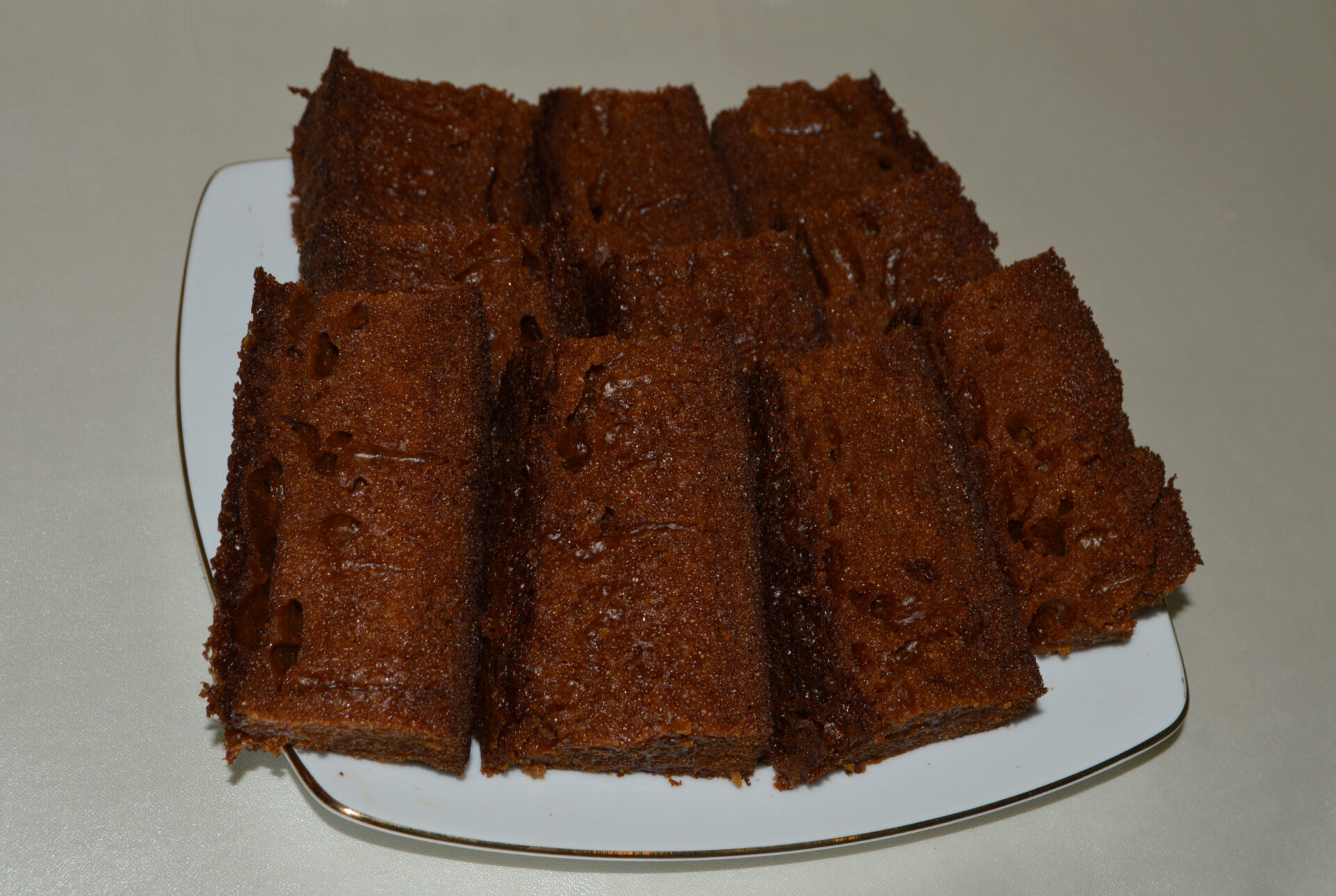
Baba neagra is a Moldovan black cake made from a thin kefir and milk batter that bakes slowly for 4 hours in a foil-wrapped pan. It turns deep brown without any cocoa, with a caramel flavor and large, sponge-like pores, and this recipe makes 14 servings.
The batter looks far too thin the first time you pour it, thinner than pancake batter, and that is exactly how it should be. What makes the cake is the baking: I wrap the pan in foil on the top, the bottom and the edges, bake it at a high temperature first and then at a low one, and let the oven do the work. It is an old recipe, and it rewards patience more than skill.
Ingredients
- 10 large eggs
- 3¼ cups all-purpose flour
- 1½ tbsp baking soda
- 1½ cups granulated sugar
- 3/4 cup sunflower oil plus 1 1/2 tbsp
- 2 cups milk plus 2 tbsp
- 1 cup kefir plus 1 tbsp
- butter for greasing the pan, room temperature
Instructions
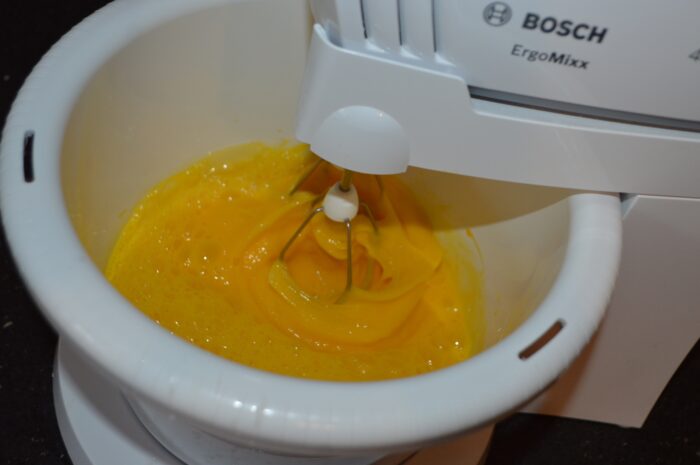
- Crack the 10 eggs into a bowl.

- Beat well with a mixer for a few minutes, until foamy.
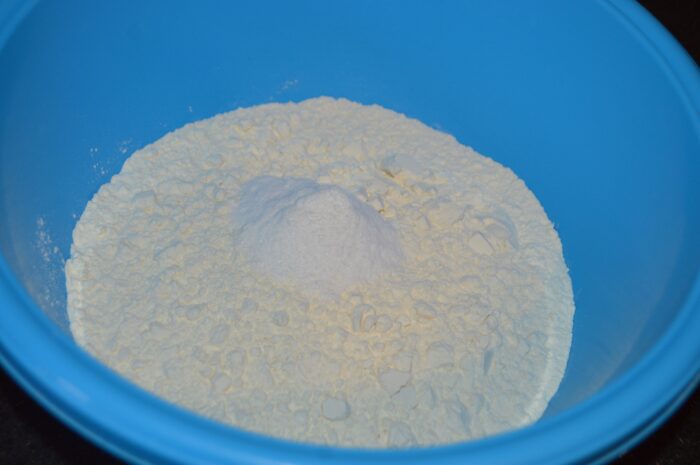
- In another bowl, add the flour and baking soda.
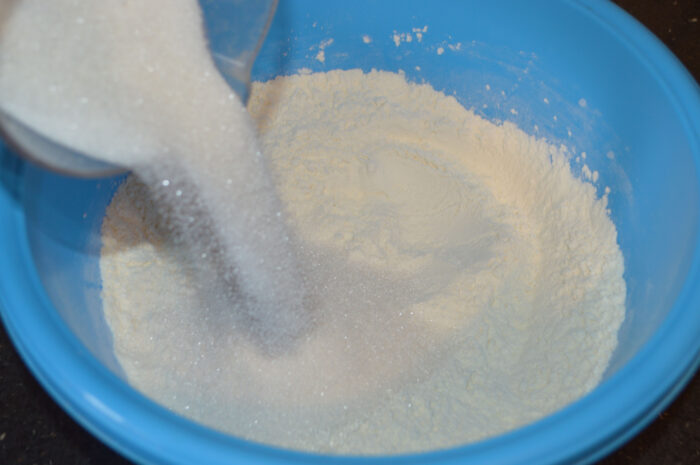
- Add the sugar.
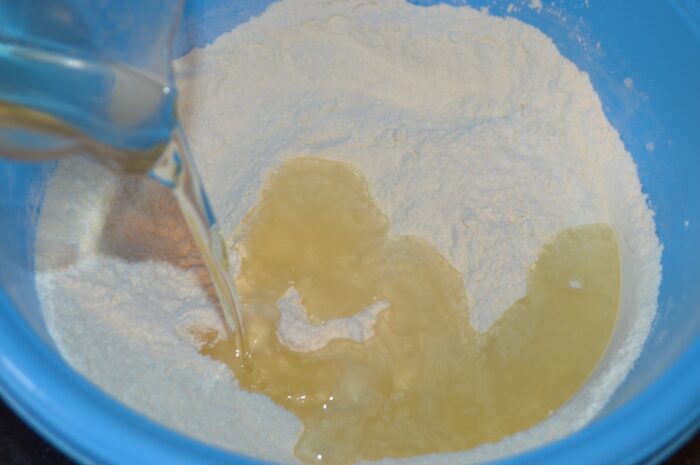
- Then add the oil and stir briefly.
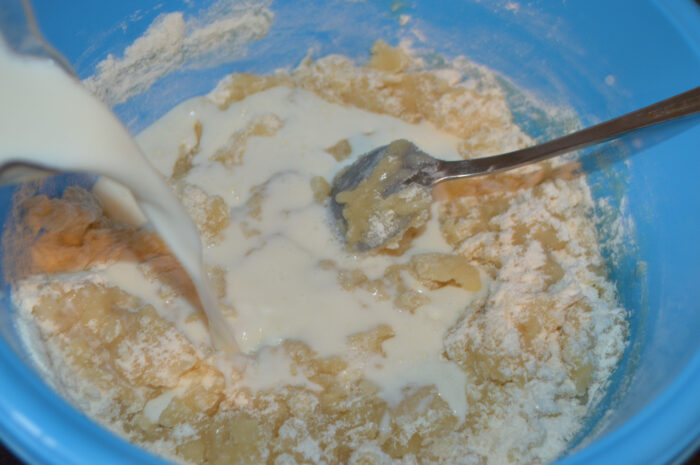
- Add the milk and whisk well.
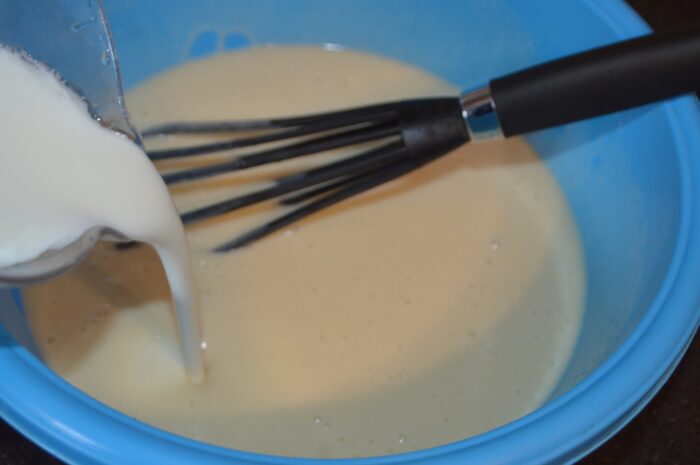
- Then add the kefir and whisk well, so there are no lumps.
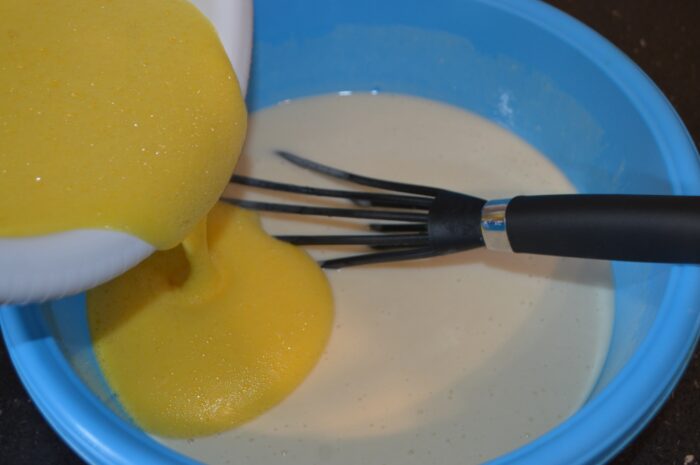
- Finally, add the beaten eggs and mix well.
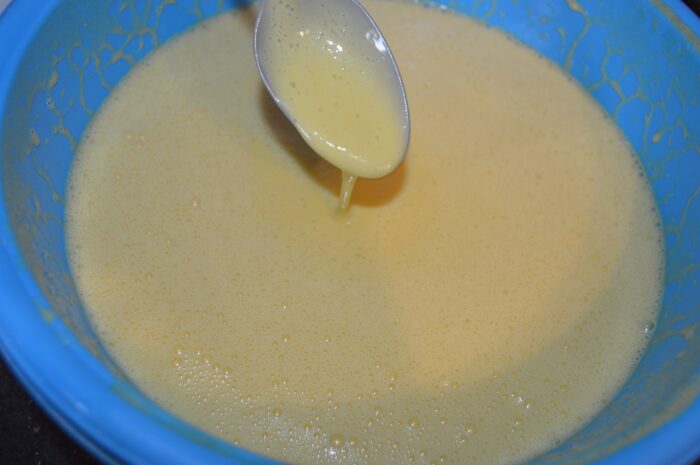
- The batter will be very thin, even thinner than crepe batter.
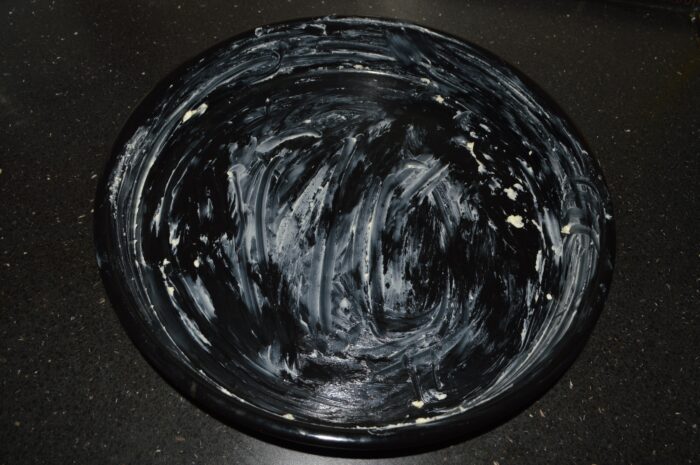
- Grease the pan with room-temperature butter.
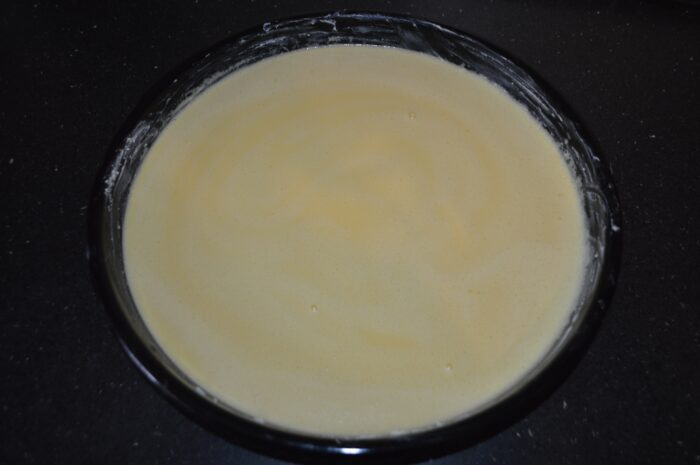
- Pour the batter into the pan.
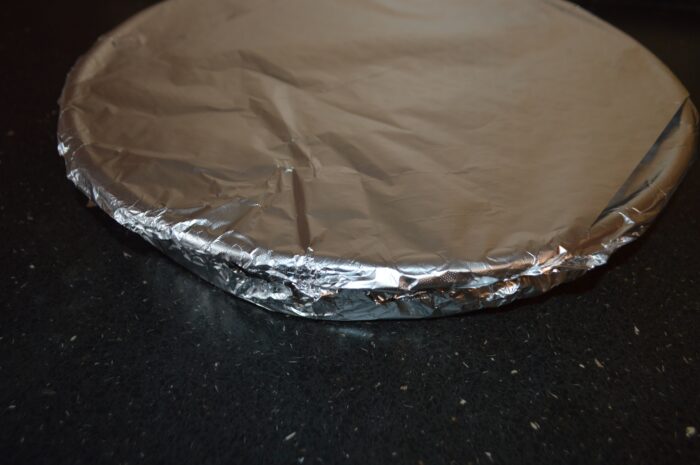
- Cover the pan with aluminum foil on the top, the bottom and around the edges. Bake in an oven preheated to 400°F (200°C) for 2 hours, then, once that time has passed, bake at 212°F (100°C) for 2 more hours.
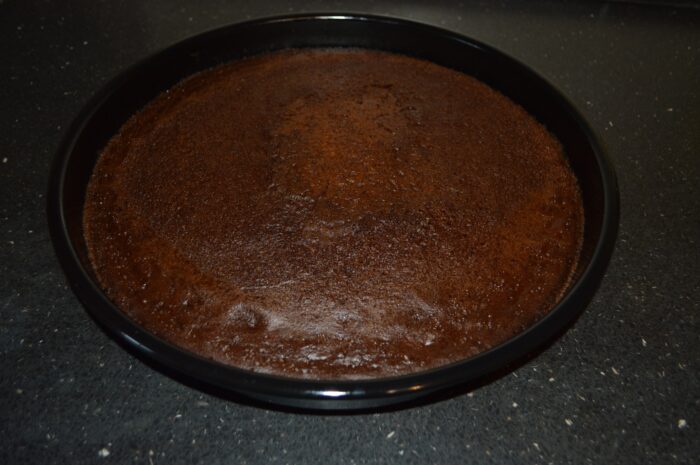
- The baba neagra is ready.
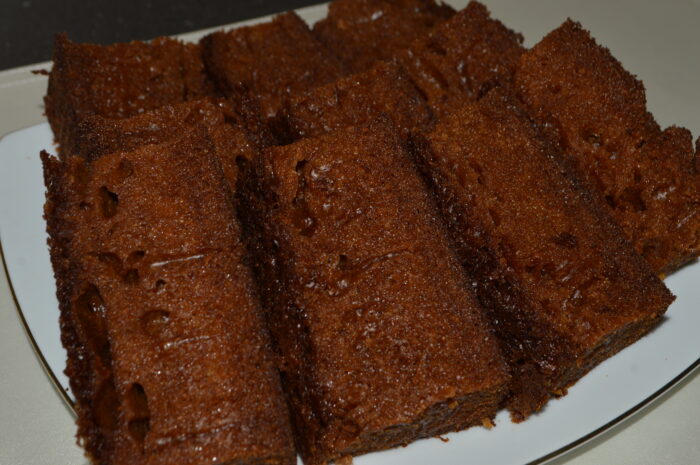
- Let it cool, then slice and serve.

Notes
- Beat only the eggs with a mixer, until foamy. Whisk the rest of the batter by hand.
- The batter is meant to be very thin, thinner than pancake batter. Whisk until it has no lumps.
- Wrap the pan in aluminum foil on the top, the bottom and the edges before baking.
- Bake 2 hours at 400°F (200°C), then 2 hours at 212°F (100°C). If your oven does not go as low as 212°F (100°C), use its lowest setting.
- Grease the pan with room-temperature butter.
- Let the cake cool before slicing, and keep leftovers covered.
Nutrition
Nutrition information is automatically calculated, so should only be used as an approximation.
What is baba neagra?
Baba neagra is a dark, soft, porous cake from northern Moldova, and its name means “black baba.” It is not a chocolate cake, even though it looks like one. The batter is made from simple everyday ingredients, eggs, flour, sugar, oil, milk and kefir, and it is baked for hours until it turns deep brown. The crumb is moist and elastic, with big air pockets like a sponge, and the flavor is sweet with a clear caramel note. Traditionally it was baked in village wood-fired ovens, and it is still a cake for holidays and family tables. At home you get the same result in a regular oven, as long as you give it time and wrap the pan in foil.
Why is baba neagra black without cocoa?
The color comes from baking, not from cocoa. The batter goes into the pan pale, and over the long bake the baking soda, the acidic kefir and the sugar work together, so the cake darkens slowly from pale gold to deep brown. That is why a cake with no chocolate in it looks almost black on the outside and brown through the middle, and why the caramel taste is so pronounced. If you stop the baking early, the cake will be paler and less flavorful, so the full 4 hours matter. The soda is also the reason this cake has so many pores, because it keeps releasing gas as the heat climbs.
Why does baba neagra bake for 4 hours at two temperatures?
The two temperatures copy how a wood-fired oven behaves. The first stage at high heat sets the cake and starts the browning. The second stage at low heat lets the center finish gently without scorching the outside, which is what gives the cake its moist, pudding-like crumb. In a village oven the heat falls slowly on its own after the bread comes out, so a home oven needs this step-down to do the same job. Do not open the oven door to check on it, because each time you do, the temperature drops and the cake can sink. Leave it to bake and trust the timer.
Why is baba neagra batter so thin?
The batter is thin because it holds a lot of liquid, and that liquid is what makes the cake moist and full of pores. With 2 cups plus 2 tablespoons of milk and about a cup of kefir for roughly 3 1/4 cups of flour, the batter comes out thinner than pancake batter. That is not a mistake, so do not add flour to thicken it. Whisk the liquids in gradually and keep whisking until no lumps remain, because lumps of flour and soda would bake into dry, bitter spots. Beat the eggs separately first, then fold them in last, so they stay foamy and give the batter some lift.
How do you wrap the pan for baba neagra?
Wrap the pan in aluminum foil on the top, the bottom and the edges. The foil acts as insulation: it softens the heat and holds in steam, so the cake can bake for hours without drying out or burning, much like it would in a covered pot in a wood-fired oven. Grease the pan with room-temperature butter before you pour in the batter, so the dark crust releases cleanly. Cover the top as well, not only the sides, and press the foil firmly around the rim so it stays in place during the long bake. Because the batter is so liquid, make sure the pan is sturdy and deep enough to hold it without spilling.
How do you know baba neagra is done?
A finished baba neagra is deep brown, set in the middle and soft and springy when you press it. After the full 4 hours the surface is dark and the cake has pulled slightly away from the pan. When you cut a slice, you should see large, irregular air pockets running through the crumb, and the texture should feel moist and elastic, not wet or doughy. If the center still jiggles or looks raw, return the covered pan to the low oven for a while longer. Let the cake cool before you slice it, because it firms up as it cools and cuts into cleaner pieces.
Can you use buttermilk or yogurt instead of kefir in baba neagra?
Yes, buttermilk is the easiest swap, and plain yogurt works too with a small adjustment. This cake is written and photographed with kefir, so treat these as adjustments rather than the exact recipe. Use the same amount of buttermilk. Plain yogurt is thicker, so thin it with a splash of milk until it pours like kefir. Whatever you pick, choose a plain, unsweetened, unflavored product, because the acidity is what reacts with the baking soda and darkens the cake. Kefir is sold in most US supermarkets next to the yogurt, usually in the plain variety. If you have no milk, you can use only kefir: replace both the milk and the kefir with the same total amount of kefir, and the cake will be slightly tangier and fluffier.
How do you serve and store baba neagra?
Let the cake cool completely, then slice it and serve it plain with tea or coffee. It is rich and sweet enough that it needs nothing else, but a spoonful of fruit compote or a scoop of vanilla ice cream suits it well if you want a dessert. Cut it into squares or wedges, and use a sharp knife, since the crust is dark and the crumb is soft. Keep leftovers covered at room temperature for a day or two, and refrigerate them if you want to keep the cake longer, because it contains milk and kefir. Bring a slice back to room temperature before eating, and the crumb turns soft and elastic again.
Frequently asked questions
Yes. Use the baking program for 2 hours, then the keep-warm program for 2 more hours, with the lid closed.
No. There is no cocoa or chocolate in it. The dark color comes from the long, slow bake, and the flavor is sweet with a caramel note.
Yes. Use 5 eggs and half of the other ingredients, and bake in a tall pan 7–8 inches (18–20 cm) wide. Bake for 1 1/2 hours at 400°F (200°C), then 1 1/2 hours at 212°F (100°C).