 Carmen
This recipe is a smart way to use bananas that have gone very ripe and spotty, transforming them into a chocolate dessert that feels homemade and comforting, yet surprisingly light. Instead of classic brownie batter with flour and a lot of sugar, you blend bananas with melted butter, cocoa and a bit of baking powder, then decorate the top with peanuts for crunch. The result is a moist center, slightly chewy edges and a flavor that balances the sweetness of fruit with the bitterness of cocoa and roasted nuts. It’s an easy, no-fuss bake suitable for beginner bakers, busy parents and anyone looking for a dessert that fits a gluten-free, reduced-sugar lifestyle without sacrificing pleasure.
What ingredients you need for sugar-free banana brownies
The ingredient list stays very short, which makes the recipe practical and budget-friendly. You only need bananas, butter, cocoa powder and baking powder for the base, plus peanuts as an optional but highly recommended topping and a little powdered sugar if you want to dress the brownies up. Ripe bananas are essential because they bring sweetness and help the batter hold together without eggs or flour. Unsalted butter keeps the flavor clean and ensures a soft crumb, while unsweetened cocoa powder gives you deep chocolate taste without extra sugar. Baking powder provides a gentle lift, so the brownies are soft rather than gummy. Peanuts on top add texture and a familiar nutty note that pairs naturally with bananas and cocoa.
How to mash bananas for the perfect brownie texture
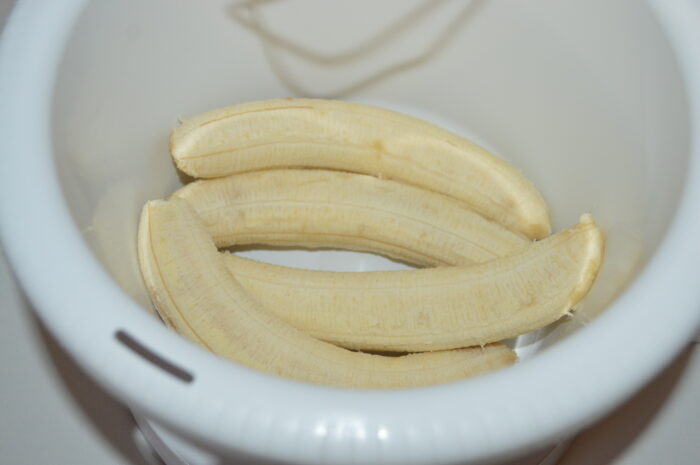
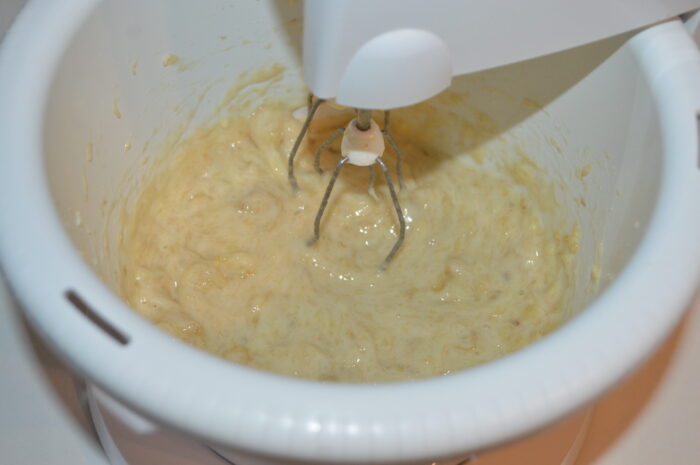
The way you handle the bananas has a direct impact on the final texture of your brownies. First, peeling them and removing any fibrous strings helps avoid unpleasant strands in the finished dessert. Start by mashing with a fork so the fruit breaks down into smaller pieces, then switch to a mixer or immersion blender to turn it into a smooth puree. This step matters because a uniform banana base allows the butter and cocoa to distribute evenly, giving you consistent flavor and structure in every slice. If you leave large chunks, some areas may bake wetter than others and the brownies can look uneven. A smooth puree also helps the baking powder work more efficiently, giving a gentle rise across the entire pan instead of random pockets.
Tips for melting butter and mixing the batter
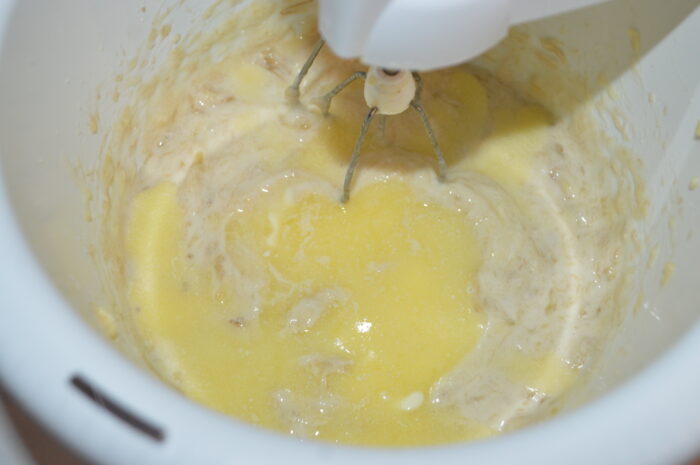
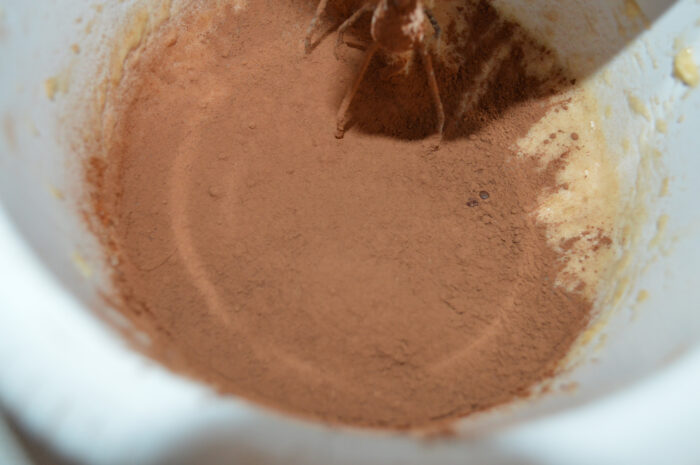
Melted butter should be warm but not scorching hot when you add it to the banana puree. If it’s too hot, it can partially cook the bananas or create small lumps, making it harder to achieve a smooth batter. Let the butter rest for a minute or two after melting, then pour it over the mashed bananas and mix until fully combined. After that, adding cocoa powder in two small batches can help avoid clumps; mix well after each addition so the color and texture become uniform. When you add the baking powder, be sure to blend thoroughly, scraping the sides and bottom of the bowl. A final beating step aerates the mixture slightly, giving a glossy, thick batter that spreads easily in the pan and bakes into a soft, even crumb.
How to bake banana brownies without drying them out
Because this batter has no flour, it behaves differently from classic brownie recipes and benefits from careful baking. Preheating the oven properly is crucial, as placing the pan into an underheated oven may cause the brownies to dry on the edges while the center stays too wet. Bake at 350°F (180°C) and start checking at around 18 minutes; you’re looking for set edges and a center that still feels soft when lightly pressed. A toothpick inserted in the middle should come out with a few moist crumbs rather than completely dry. Overbaking will remove too much moisture from the bananas, leaving you with a firm, cake-like texture instead of a fudgy one. Allow the pan to cool before slicing so the squares hold their shape and don’t crumble
Decorating with peanuts and serving suggestions
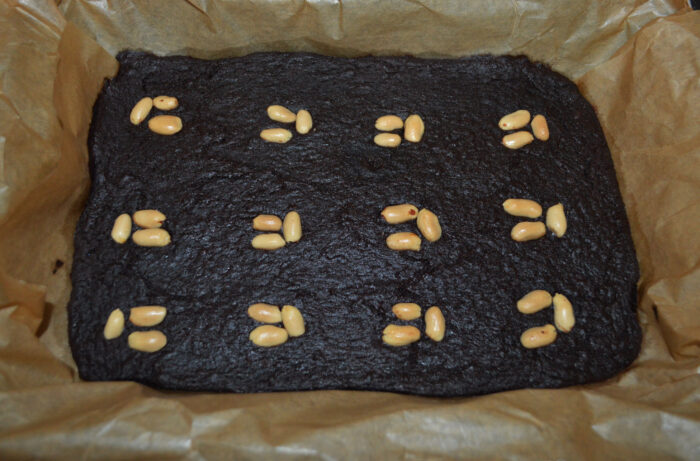
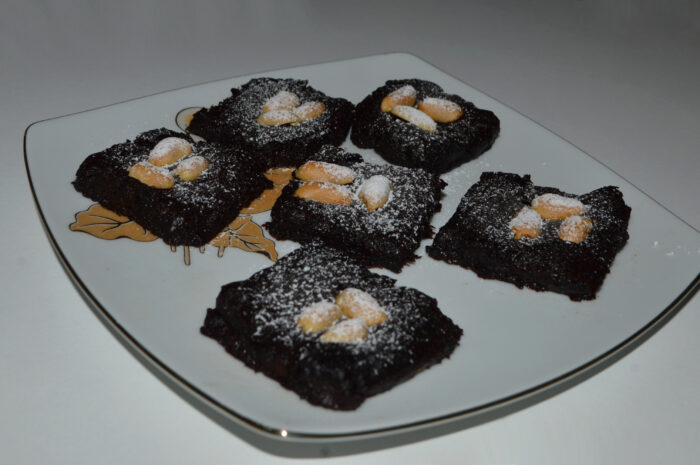
Peanuts give these brownies personality and a lovely contrast between soft interior and crunchy top. You can scatter whole peanuts for a rustic look or roughly chop them if you want more even coverage and smaller pieces in each bite. When the brownies bake, the peanuts toast slightly, intensifying their flavor and adding a warm, nutty aroma to your kitchen. After baking and cooling, a light dusting of powdered sugar provides visual appeal without making the dessert heavy; it’s optional, but very effective if you plan to serve the brownies for guests or special occasions. Serve them plain, with a cup of coffee or tea, or pair with a small scoop of plain yogurt or vanilla ice cream if you’re not strictly avoiding extra sugar.
Storage and freezing tips for healthy brownies
These banana-based brownies keep well and are easy to portion ahead for snacks or lunchboxes. Once completely cooled, store them in an airtight container at room temperature if your kitchen is cool, or in the fridge if it’s warm, to preserve their moist texture and prevent spoilage. They generally stay pleasant for several days, though the peanuts on top will be crunchiest in the first 24 hours. To freeze, place slices in a single layer on a tray, freeze until firm, then transfer to a freezer bag or container with baking paper between layers to prevent sticking. You can thaw at room temperature or warm gently in the oven or microwave before serving. Freezing makes it simple to prepare a batch on the weekend and enjoy small portions throughout the week.
Ingredients
- 4 medium ripe bananas
- 9 tablespoons unsalted butter melted
- ⅓ cup unsweetened cocoa powder
- 1 teaspoon baking powder
For decor:
- unsalted peanuts roughly chopped
- powdered sugar for dusting, optional
Instructions
- Peel the bananas and place them in a large mixing bowl.

- First mash the bananas lightly with a fork, then blend or mix them until you get a smooth banana puree with no large chunks.
- Melt the butter, pour it over the banana puree, and mix until fully combined.
- Add the unsweetened cocoa powder to the bowl and mix until the color is evenly chocolatey.
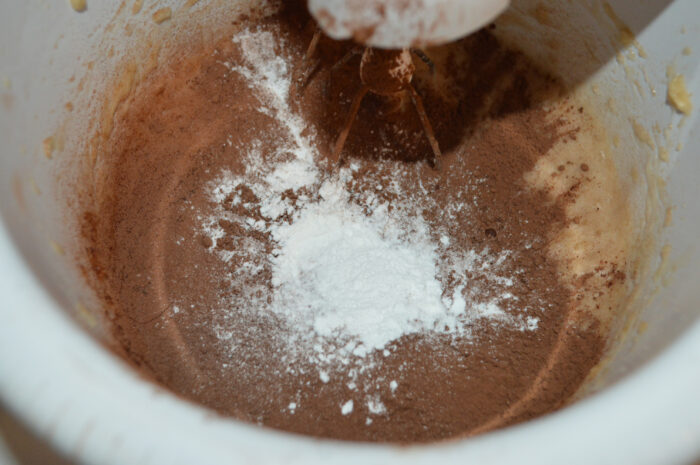
- Sprinkle in the baking powder and mix again so it is evenly distributed throughout the batter.
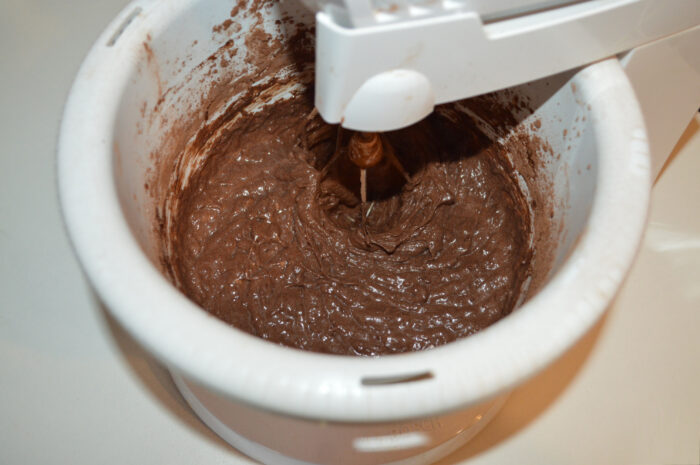
- Use a hand mixer or whisk to beat the mixture until the batter looks smooth and homogeneous, with no visible streaks.
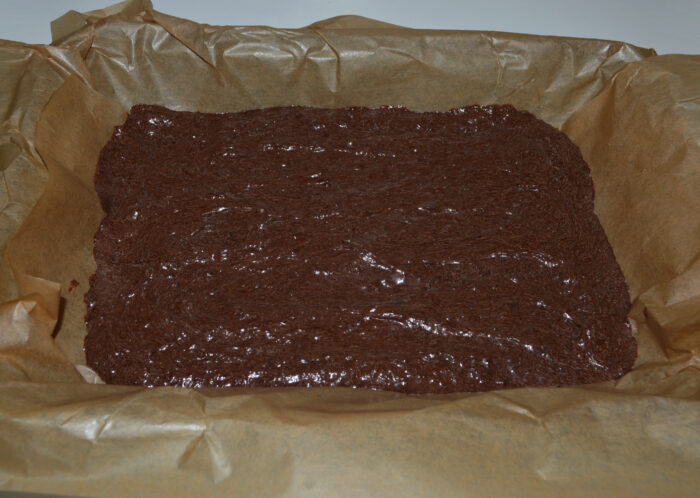
- Line a baking pan with parchment paper, pour in the batter, and spread it out in an even layer with a spatula.

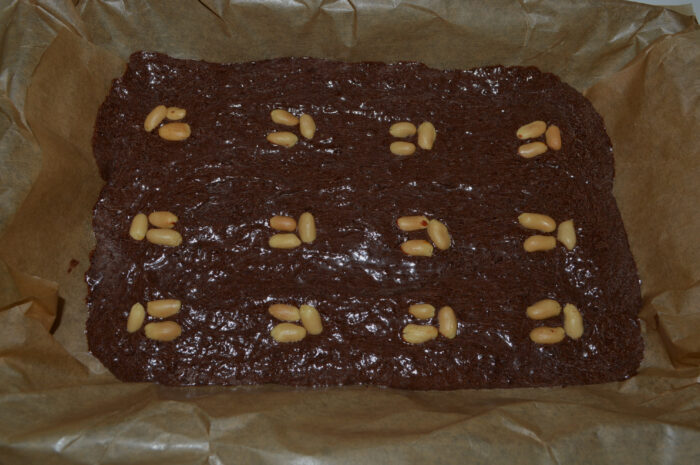
- If you like extra crunch, sprinkle the top with chopped peanuts before baking.
- Bake in a preheated oven at 350°F (180°C) for about 18–20 minutes, until the edges are set but the center is still slightly soft.

- Let the brownie cool completely, then, if desired, dust the top with powdered sugar before slicing and serving.
Notes
- This recipe relies on the natural sweetness of ripe bananas, so there is no extra sugar in the batter apart from the optional powdered sugar on top.
- Use very ripe bananas for the best flavor and texture; they should mash easily and have a strong banana aroma.
- Do not overbake the brownie, as it can become dry; it should stay slightly soft in the center and firm up as it cools.
- You can mix the nuts into the batter instead of only sprinkling them on top if you prefer more crunch in every bite.
- For a dairy-free version, you can experiment with plant-based butter, but the texture may be slightly different from the original.
- Let the brownie cool completely before slicing to avoid crumbling and to get clean, neat squares.
Nutrition
Nutrition information is automatically calculated, so should only be used as an approximation.