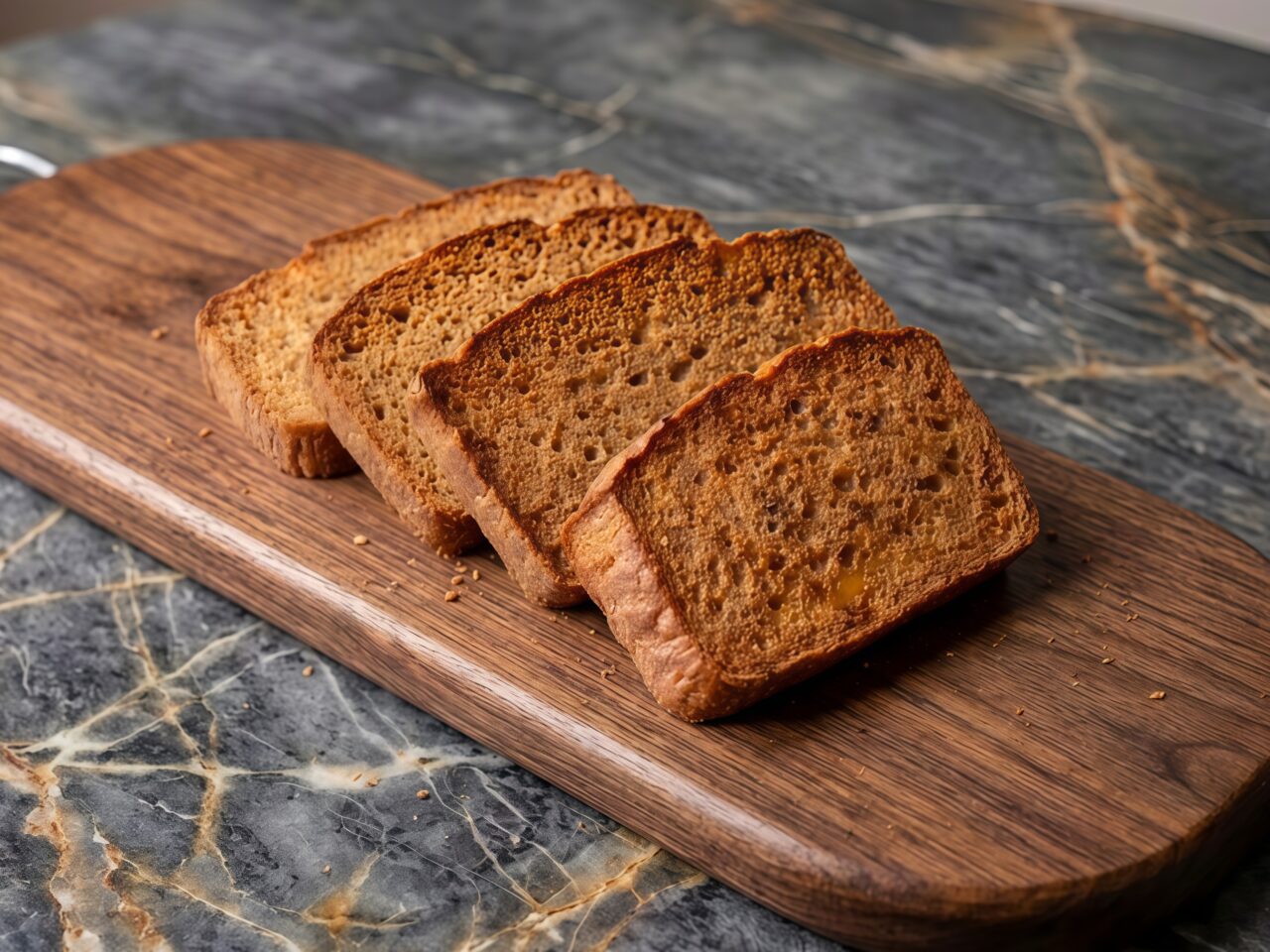
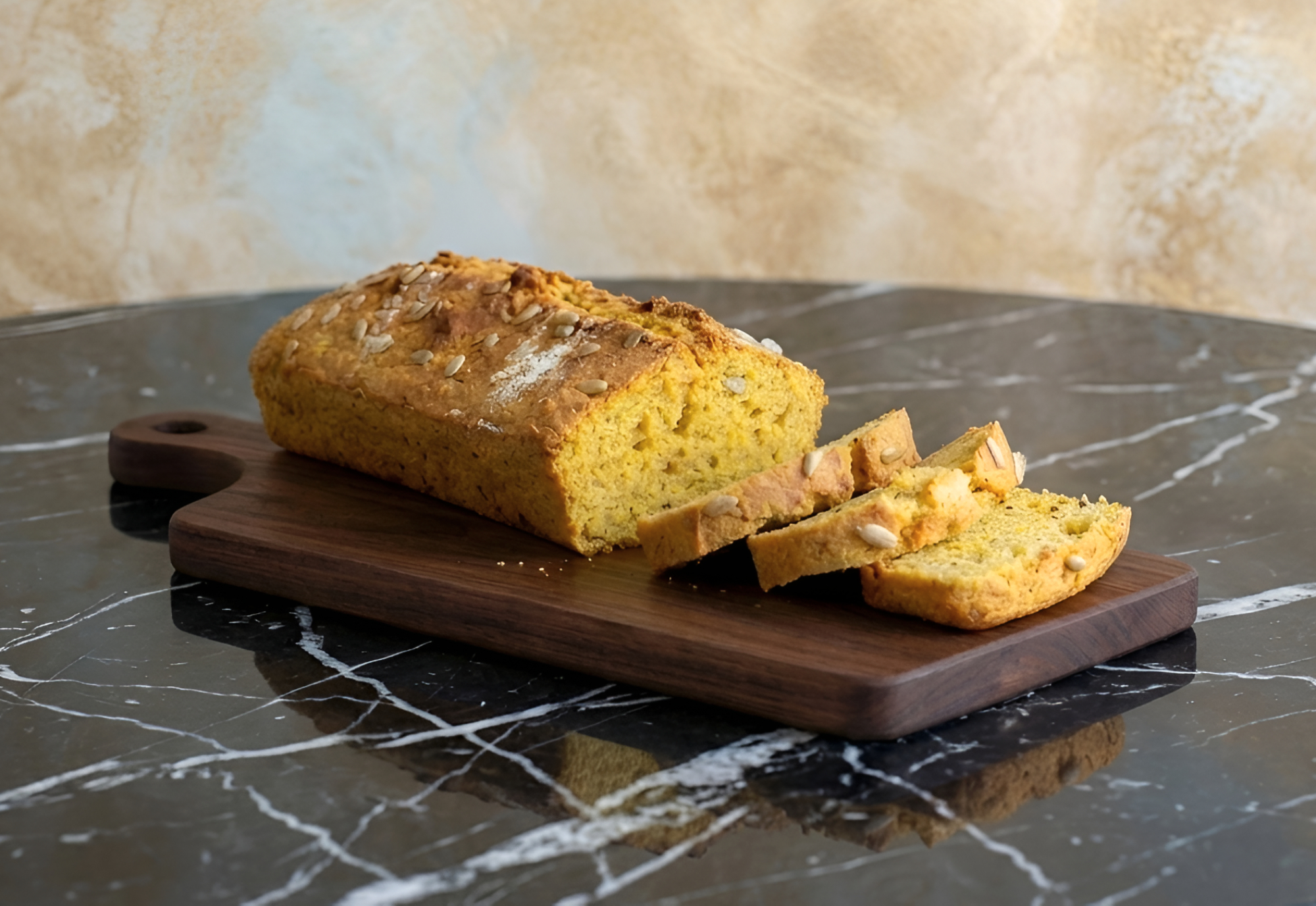
This kefir cornbread-style loaf is a simple, gluten free bread you can bake any day of the week. Made with corn and rice flour, plus ground flaxseed and crunchy seeds, it needs no yeast and no kneading. You just whisk, mix and bake, and in about 45 minutes you have a soft, slightly moist loaf with a golden crust. It is great for breakfast, snacks or as a side for soups and salads.
Why kefir works so well in this quick bread
Kefir is an excellent ingredient for quick breads because it brings both flavor and structure without extra effort. Its natural acidity reacts with the baking powder, helping the loaf rise slightly and giving it a softer crumb. The result is a bread that feels lighter than many gluten free loaves, which can sometimes be heavy or compact. Kefir also keeps the batter moist, so the bread stays pleasant for longer and does not dry out after just a few hours. The subtle tang of kefir balances the sweetness of corn and complements savory toppings like cheese, butter or avocado. Another advantage is that kefir is easy to find in most grocery stores, and if you already drink it, you often have some left in the fridge. Using it in bread is a practical way to avoid waste and turn a simple batter into a flavorful, everyday loaf.
How to mix the flours and seeds for the best texture
Getting a good texture in gluten free bread is mostly about the balance between dry and wet ingredients. In this recipe, you first mix the rice flour with the beaten egg and salt, which helps hydrate it from the beginning. When you add the cornmeal, you make sure to stir it in well so there are no dry pockets. This step is important because cornmeal tends to clump if it is not mixed thoroughly. Ground flaxseed goes in later and absorbs part of the liquid, slightly thickening the batter and adding a bit of elasticity. Whole flax seeds and sunflower seeds are added at the end so they remain evenly distributed and do not sink to the bottom. The final batter should be smooth and medium in thickness, easy to pour but not runny. If it feels too thick, it will bake up dense; if it is too thin, the loaf may not hold its shape well.
Tips for getting a smooth, lump-free batter
To avoid lumps in the batter, it helps to work gradually and use a whisk whenever possible. Start by whisking the egg with salt until it looks uniform, then add the rice flour in small portions, mixing well after each addition. This step creates a smooth base that is easier to work with when the rest of the ingredients go in. When you add the cornmeal and baking powder, keep stirring until the mixture is even and you do not see dry spots. Pour the kefir slowly, in stages, while continuously mixing, which prevents clumps from forming and allows the flours to hydrate properly. Once the batter is smooth, you can switch to a spatula to fold in the ground flaxseed, whole seeds and oil. If you notice small lumps at the end, keep stirring for another minute or two rather than adding extra liquid. A properly mixed batter bakes into a uniform crumb with no gummy or dry areas.
How to store and reuse leftover kefir bread
Storing this gluten free kefir bread properly helps you enjoy it over several days. Once the loaf is fully cooled, wrap it in plastic wrap or place it in a sealed container at room temperature for one to two days, depending on how warm your kitchen is. Because there is no wheat gluten or preservatives, it may dry out faster than store-bought bread, so avoid leaving it uncovered. For longer storage, slice the bread and freeze the slices in a freezer-safe bag, separating them with small pieces of parchment if needed. You can then take out exactly as many pieces as you need and toast them directly from frozen. Toasting revives the flavor and improves the texture, especially after freezing. This makes the recipe practical for meal prep: you bake once and have a gluten free option ready for quick breakfasts or snacks. It is also a good way to use up extra kefir without wasting it.
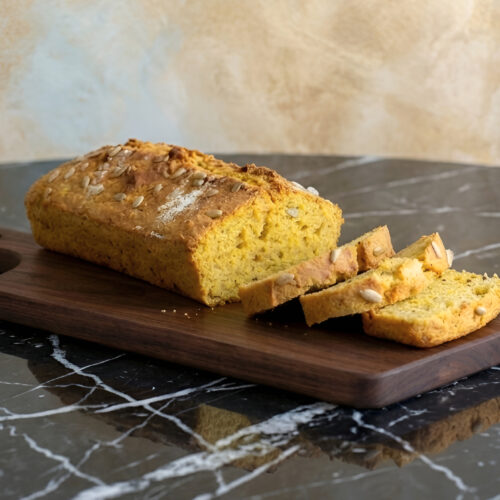
Kefir Cornbread-Style Gluten Free Loaf
Ingredients
- ¾ cup plus 1 tablespoon plain kefir
- 1 large egg
- 3/4 cup fine cornmeal (corn flour)
- 1/2 cup white rice flour
- 3 tablespoons ground flaxseed
- 1 tablespoon plus 1 teaspoon vegetable oil
- 1 tablespoon whole flax seeds
- 1 tablespoon raw sunflower seeds optional
- ⅓ teaspoon salt
- ½ teaspoon baking powder
Instructions
- In a large bowl, crack the egg, add the salt, and whisk lightly with a whisk or fork.
- Pour in the rice flour and mix well.
- Add the cornmeal to the bowl and mix again until combined.
- Add the baking powder and stir again.
- Gradually pour in the kefir, mixing until the batter is smooth.
- The batter should be completely smooth, with no lumps.
- Add the ground flaxseed and mix to incorporate.
- Add the whole flax seeds and sunflower seeds.
- Pour in the oil and mix everything well. The batter should have a medium consistency, not too runny but not too thick.
- Carefully pour the prepared batter into a silicone loaf pan.
- Sprinkle the top with sunflower seeds or sesame seeds, if you like, and score the top lengthwise with a knife.
- Place the pan in the oven and bake at 350°F (175°C) for 30–35 minutes.
- Let the baked loaf cool completely, then slice and serve with your favorite dishes.
Notes
Frequently Asked Questions
Yes, you can use plain cultured buttermilk instead of kefir in the same amount. The bread will be slightly milder in taste, but the texture and baking time will stay almost the same.
You can increase the amount of seeds slightly or add a small handful of chopped nuts if you like extra crunch. Avoid adding too much, as a very heavy batter may not rise as well and the loaf can become dense.
Besides the golden top, the best way to check is with a toothpick inserted in the center of the loaf. If it comes out clean or with a few dry crumbs, the bread is done; if it has wet batter, bake a few more minutes.
You can try a plant‑based kefir or drinkable yogurt made from soy or coconut, but the texture may change slightly. Choose an unsweetened variety and keep the same liquid amount to avoid an overly wet batter.