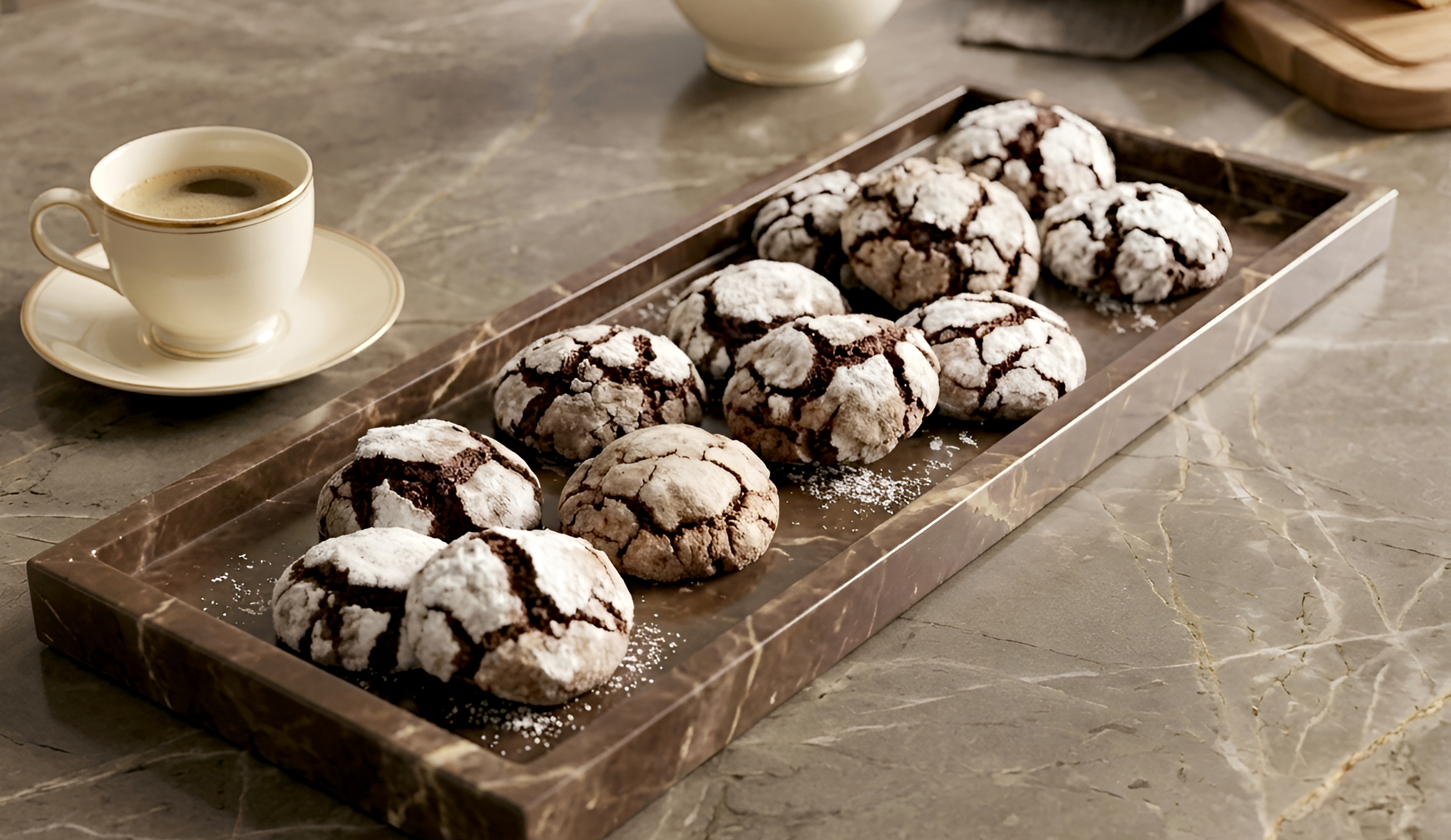
These chocolate crinkle cookies are the kind of bake‑and‑share recipe you will come back to again and again. The dough is made with dark chocolate, cocoa and just a handful of basic pantry ingredients, then chilled, rolled in powdered sugar and baked until beautifully crackled. Inside they stay soft and fudgy, almost like a brownie, while the outside forms a delicate sugary crust. They are perfect for holiday cookie trays, coffee breaks or sweet homemade gifts.
Why chilling the dough is essential for chocolate crinkle cookies
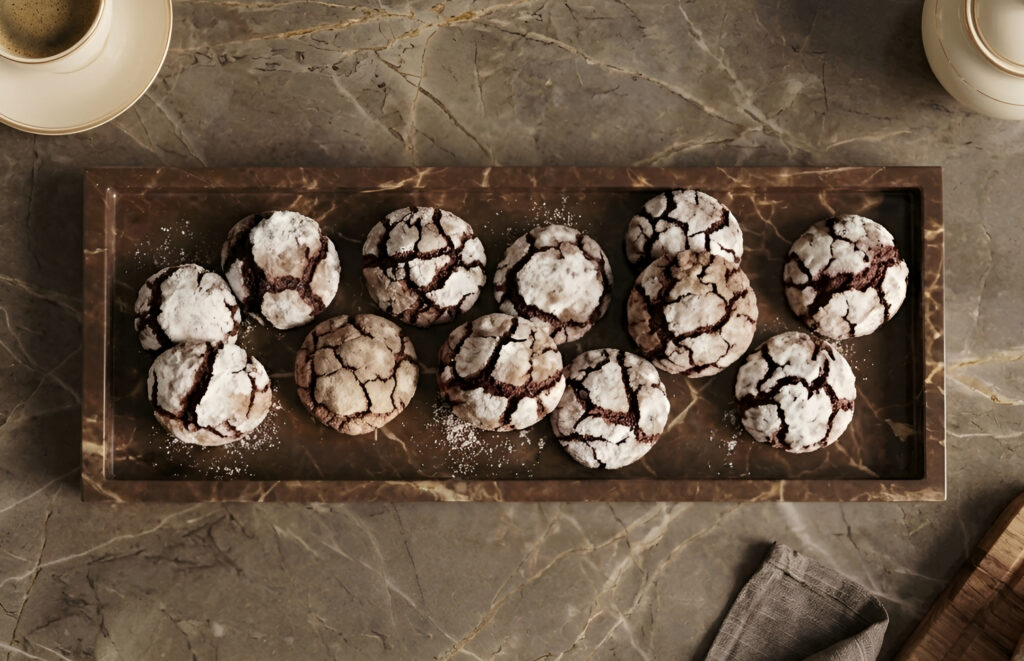
Chilling the dough might feel like an extra step, but it is crucial for getting chocolate crinkle cookies with the right shape and texture. When the dough is freshly mixed, it is quite soft and sticky because of the melted chocolate, butter and beaten eggs. If you shape and bake it immediately, the cookies will spread too much in the oven and lose their pretty, rounded form. Resting the dough in the refrigerator firms up the fat and allows the flour and cocoa to fully hydrate. This makes the dough easier to handle and less sticky when you roll it into balls and coat it in powdered sugar. The cold dough also spreads more slowly in the oven, so the outside sets while the inside stays soft and fudgy. As the cookies rise and crack open, the thick layer of powdered sugar separates and reveals dramatic dark lines beneath, giving each cookie that classic crinkle pattern.
How to shape and coat the cookies for perfect cracks
Shaping and coating the dough correctly is the secret to getting bold, attractive cracks on the surface of your chocolate crinkle cookies. Once the dough is well chilled, use a small cookie scoop or a spoon to portion equal amounts so they bake evenly. Roll each portion quickly between your palms to form a smooth ball; if the dough sticks, you can lightly dust your hands with cocoa powder instead of flour to avoid changing the texture. Next, roll each ball generously in powdered sugar, pressing gently so it clings to every side. Do not shake off the excess sugar; a thick coating is exactly what you need for a strong contrast once the cookies bake. Arrange the balls on a parchment‑lined baking sheet with enough space around them to allow for spreading. As they bake, the dough expands and the surface splits, and the powdered sugar settles into the cracks, creating the marbled look that makes these cookies so eye‑catching.
Baking time and temperature: how to keep the centers fudgy
The baking time and temperature are key to keeping the center of chocolate crinkle cookies soft and brownie‑like rather than dry. A moderately hot oven, around 350°F (180°C), allows the outside to set and crack while the middle stays tender. If the oven is too cool, the cookies will spread too much before the crust forms; if it is too hot, the edges can harden before the inside has time to rise. For most home ovens, 8–12 minutes is enough, depending on the size of your cookie balls and how soft you like the centers. You will know they are ready when the surface is well crackled, the edges look set and the center still appears slightly soft and puffy. The cookies will continue to set as they cool on the baking sheet for a few minutes. Taking them out at this stage ensures that every bite is rich and fudgy, with a delicate crispness from the powdered sugar crust.
Storage tips: keeping cookies soft and fresh
Storing chocolate crinkle cookies properly helps keep them soft inside and protect their pretty, crackled tops. Once they are completely cool, place them in an airtight container, layering them gently with parchment paper if you need to stack them. This prevents the powdered sugar from sticking too much to the neighboring cookies. At room temperature, they usually stay fresh for several days, making them ideal for preparing ahead of holidays or events. If your kitchen is very warm, you can store the container in a cooler spot or even in the refrigerator, but remember that the fridge may cause a bit of moisture on the surface. For longer storage, you can freeze the baked cookies in a well‑sealed box or bag; thaw them at room temperature and dust with a little extra powdered sugar right before serving if needed. You can also freeze the shaped, unbaked dough balls and bake them from frozen, adding a couple of minutes to the baking time.
Troubleshooting: why your crinkle cookies did not crack
If your chocolate crinkle cookies did not crack properly, a few common issues might be the cause. The most frequent problem is skipping or shortening the chilling time; warm dough spreads too quickly in the oven, so the surface smooths out instead of splitting open. Another issue is not using enough baking powder, or using an old leavening agent that has lost its power, which prevents the dough from rising and opening cracks. Rolling the dough balls in too thin a layer of powdered sugar can also affect the look; without a generous coating, you will not see the strong contrast between dark dough and white sugar. Oven temperature matters too: if it is much lower than 350°F (180°C), the cookies may dry slowly without forming dramatic fissures, while an overly hot oven can set the surface too fast. By checking these points, you can adjust your next batch and achieve the classic crinkle pattern.
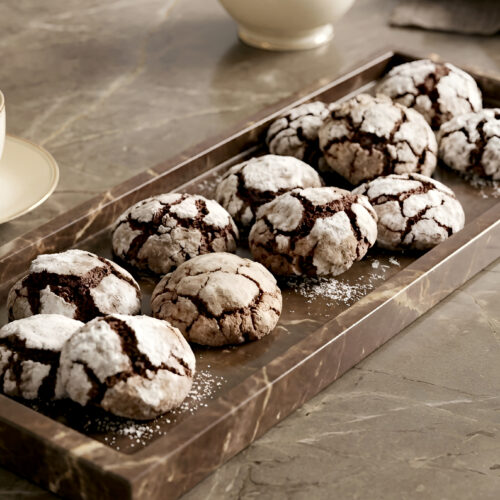
Chocolate Crinkle Cookies with Dark Chocolate
Ingredients
- 2 large eggs
- 5.3 oz dark chocolate
- 3 tablespoons unsalted butter
- 1 cup all‑purpose flour
- ¼ cup unsweetened cocoa powder
- ¼ cup sugar
- 1¼ teaspoon baking powder
- 1 teaspoon vanilla extract
- pinch of salt
- powdered sugar for rolling
Instructions
- Break the dark chocolate into pieces and melt it together with the butter over a bain‑marie (double boiler) until smooth.
- In a deep bowl, beat the eggs with the granulated sugar and a pinch of salt until the mixture is pale and lightly foamy.
- Add the slightly cooled melted chocolate mixture to the eggs and beat again on low speed for about 1 minute, just until combined.
- In a separate bowl, whisk together the flour, cocoa powder, baking powder and vanilla. Sift this dry mixture into the batter in 2 additions, gently folding with a spatula until you get a thick, sticky dough.
- Cover and refrigerate the dough for at least 1 hour, preferably 2 hours, until firm enough to shape.
- Roll portions of chilled dough into small balls, then coat each ball generously in powdered sugar without shaking off the excess.
- Bake at 350°F (180°C) for about 8–12 minutes, until the cookies have spread, developed deep cracks and look just set around the edges while still soft in the center.
Frequently Asked Questions
Dark chocolate gives these cookies their intense flavor and fudgy texture, but you can replace part of it with milk chocolate for a milder taste, keeping at least half dark for structure.
They were likely baked too long or at too high a temperature; take them out when the edges look set but the centers are still slightly soft, and let them finish setting on the tray.
Make sure the dough is well chilled, measure flour and cocoa correctly, and avoid over‑mixing after adding the dry ingredients, as a looser dough will spread more in the oven.