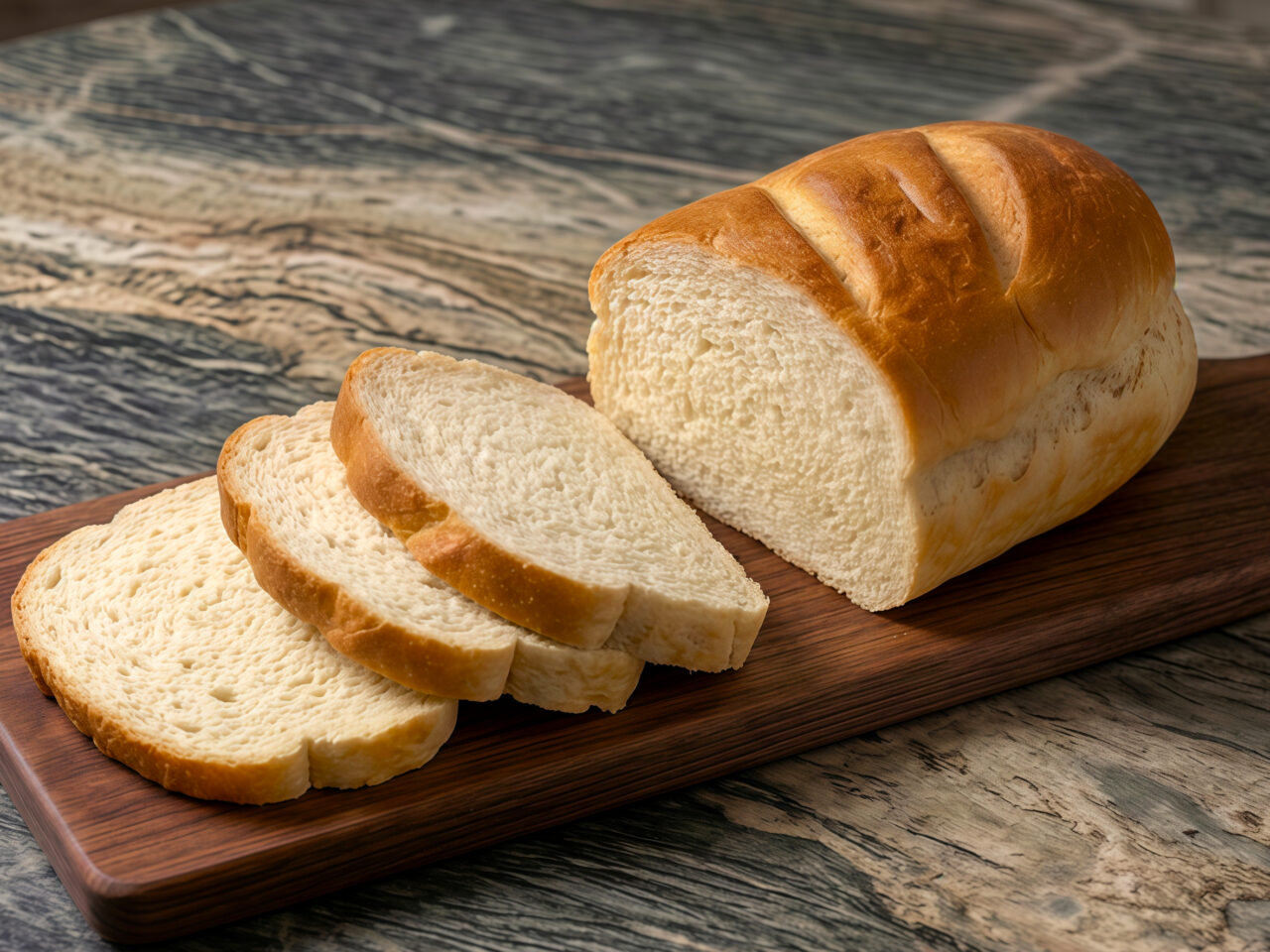
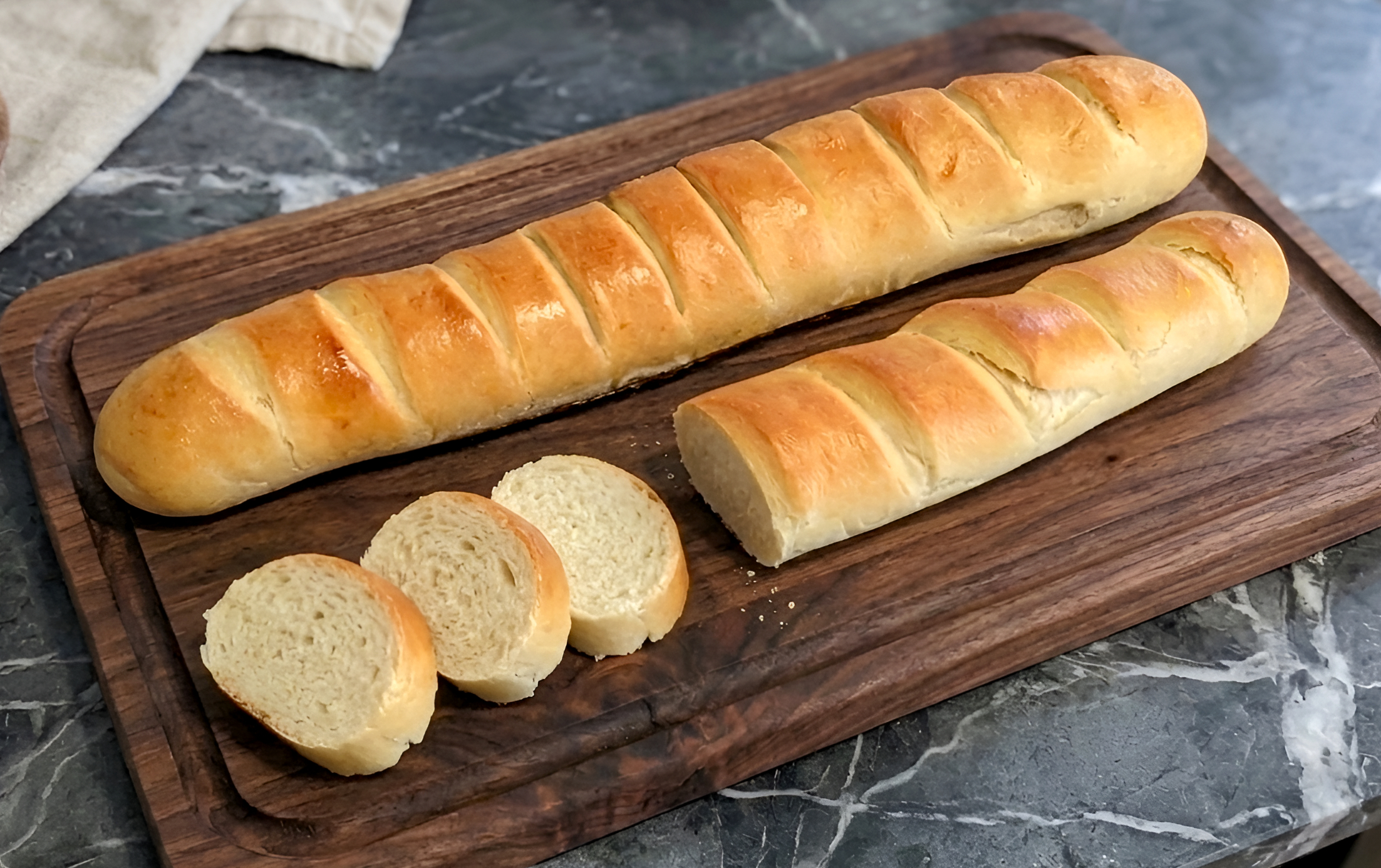
A fresh French baguette straight from your own oven is much easier than it looks. This recipe uses simple pantry ingredients and warm milk to create a soft, tender crumb wrapped in a thin, crisp crust. With two rises, gentle shaping and a hot bake, you get two beautiful loaves that smell like a real bakery. Serve them warm with jam, butter or your favorite savory toppings.
What ingredients do we need for a classic French baguette
For a classic French‑style baguette at home, you actually need very few ingredients, which makes this recipe perfect for everyday baking. The base is all‑purpose flour, which gives the bread enough strength to hold its shape while still keeping the crumb tender. Warm milk replaces the usual water and adds a slightly richer taste, a softer texture and a beautifully browned crust during baking. Active dry yeast helps the dough rise and develop those tiny air pockets that make the baguette light inside. A small amount of fine salt balances the flavor and strengthens the dough structure. Finally, an egg yolk mixed with a bit of milk is brushed over the shaped loaves before baking. This simple glaze gives the baguettes a shiny, golden surface and helps the crust become pleasantly crisp. With just these pantry staples you can bake two generous loaves that feel like they came from a neighborhood bakery.
How to mix and knead the dough for the best texture
The first step to a successful baguette is mixing and kneading the dough correctly, because this is when the gluten network forms and traps air. Start by gently warming the milk; it should feel comfortably warm to the touch, not hot, so it does not damage the yeast. Stir the active dry yeast into the milk and let it sit for a couple of minutes until it begins to dissolve. Add the flour and salt directly to the bowl and begin mixing with a spoon or your hands until a rough dough forms. At the beginning it may look shaggy and uneven, but that is normal. Turn the dough out onto a lightly floured surface or keep it in the bowl and knead for several minutes. As you fold and press, the dough becomes smoother, more elastic and less sticky. When it stretches without tearing easily, you know the gluten is developed enough. This step is essential for achieving a chewy yet soft crumb inside your French baguette.
Why two rises are important for homemade baguettes
Allowing the dough to rise twice might seem like an extra step, but it is one of the secrets to a light and flavorful baguette. After the initial kneading, the dough goes into a lightly greased or floured bowl, covered tightly with plastic wrap. Placing the bowl in a warm, draft‑free oven for the first proof lets the yeast work steadily, filling the dough with tiny gas bubbles. This first rise is usually around forty minutes, or until the dough visibly swells and feels airy when gently pressed. Kneading the dough briefly after this stage redistributes the yeast and gas, which leads to even more expansion during the second rise. The second proof, about thirty minutes, improves both flavor and texture, giving the crumb a more open structure and a pleasant chew. Skipping it often results in a denser loaf. With two rises, your baguettes bake up taller, lighter and full of delicate holes, just like bread from a good bakery.
How to divide and shape the baguettes like a baker
Shaping the loaves is the moment when your dough begins to look like real baguettes, so it is worth taking your time. After the second rise, turn the dough onto a silicone mat or clean work surface and gently press out any large air pockets without completely deflating it. Use a sharp knife or bench scraper to cut the dough into two equal pieces so the loaves bake evenly. Keep one piece covered with plastic wrap to prevent the surface from drying while you work on the other. Flatten the first piece into a rough rectangle with your fingertips, then roll it up tightly from the long side, pressing as you go to build surface tension. Pinch the seam along the length of the log to seal it well; this helps the baguette hold its shape and keeps it from opening along the side in the oven. Roll it gently back and forth to stretch it into a long, even loaf. Repeat the same steps with the second piece of dough.
Baking the baguettes at the right temperature
Proper baking is crucial for developing both flavor and texture in your French baguettes. Always preheat your oven thoroughly so it is hot when the loaves go in; a well‑heated oven helps the dough rise quickly in the first minutes of baking. Place the tray with the scored baguettes on the middle rack for even heat. The loaves usually need around thirty minutes, but exact time can vary depending on your oven. You are looking for a deep golden color and a crust that feels firm when tapped. If you like an extra crisp exterior, you can place a small oven‑safe dish with hot water on a lower rack to create steam. The moisture delays crust formation for a few minutes, allowing the bread to rise more and develop a thinner, crackly shell. Once baked, transfer the baguettes to a wire rack so the bottoms do not become soggy. Let them cool slightly before slicing so the crumb sets properly.
How to serve and enjoy homemade French baguette
A freshly baked French baguette is incredibly versatile and can be enjoyed in many simple, delicious ways. When the loaves are still warm, slice them and serve with butter, jam or honey for a comforting breakfast with tea. The soft interior and crisp crust also make these baguettes ideal for sandwiches, especially with cured meats, cheeses or salted red fish as suggested in the original recipe. You can cut thin slices, toast them lightly and use them as a base for bruschetta or small appetizers. The bread pairs well with soups and salads, turning a light meal into something more filling. If you have leftovers the next day, briefly reheat the baguette in a hot oven to refresh the crust. This homemade bread is also perfect for making garlic toast or savory croutons. However you serve it, each slice highlights the satisfying work of mixing, shaping and baking your own bread at home.
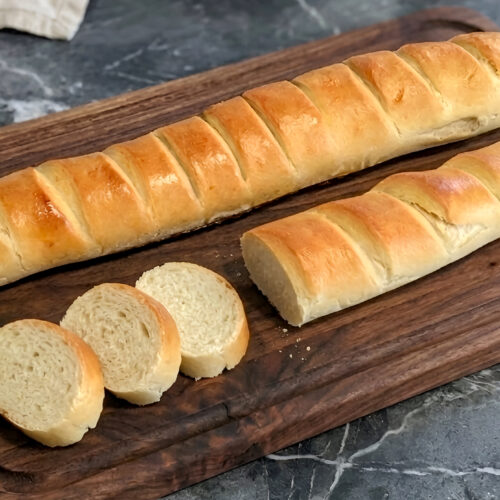
French Baguette Made at Home
Ingredients
- 1½ cups warm milk
- 1 teaspoon fine salt
- 2 teaspoons active dry yeast
- 4 cups all-purpose flour spooned and leveled
For brushing:
- 1 egg yolk
Instructions
- Mix the dough: Stir the yeast into the warm milk, then add the flour and salt and knead until you get a smooth, elastic dough.
- First and second rise: Cover the bowl with plastic wrap and place it in a warm oven for about 40 minutes. Knead the risen dough again, then let it rise a second time for another 30 minutes.
- Divide the dough: Turn the dough out onto a silicone mat and knead briefly, then cut the ball of dough into 2 equal pieces.
- Shape the first baguette: Cover one piece with plastic wrap so it does not dry out. Flatten the other piece into a rough rectangle, roll it up tightly into a log and pinch the seam well so the baguette does not open while baking.
- Shape the second baguette and rest: Form the second baguette in the same way. Place both baguettes on a baking tray and let them rest for at least 20 minutes.
- Egg wash and scoring: Brush the baguettes with the egg yolk mixed with a little milk, then use a sharp knife to make a few diagonal cuts on top.
- Bake: Bake the baguettes in a preheated oven for about 30 minutes, until golden and crisp.
- Serve: Serve the baguettes warm with tea and jam, or slice them and make sandwiches with salted red fish.
Frequently Asked Questions
The most common reasons are inactive yeast, milk that was too hot or insufficient proofing time. Make sure the milk is just warm, not hot, and always give the dough enough time to double in size during both rises before baking. Avoid opening the oven door in the first fifteen minutes so the temperature stays stable.
Yes, you can freeze both baked baguettes and shaped dough. For baked bread, let the loaves cool completely, then wrap tightly and freeze for up to a month; reheat directly from frozen in a hot oven. For dough, freeze the shaped baguettes on a tray, then wrap and store; thaw and let them rise again before baking until they feel light and puffy.
You can customize the flavor by mixing a small amount of dried herbs or seeds into the dough or sprinkling them on top after the egg wash. Keep the additions moderate so they do not weigh down the dough or change the hydration too much. Sesame seeds, poppy seeds or dried rosemary work well and still keep the spirit of a simple homemade baguette.