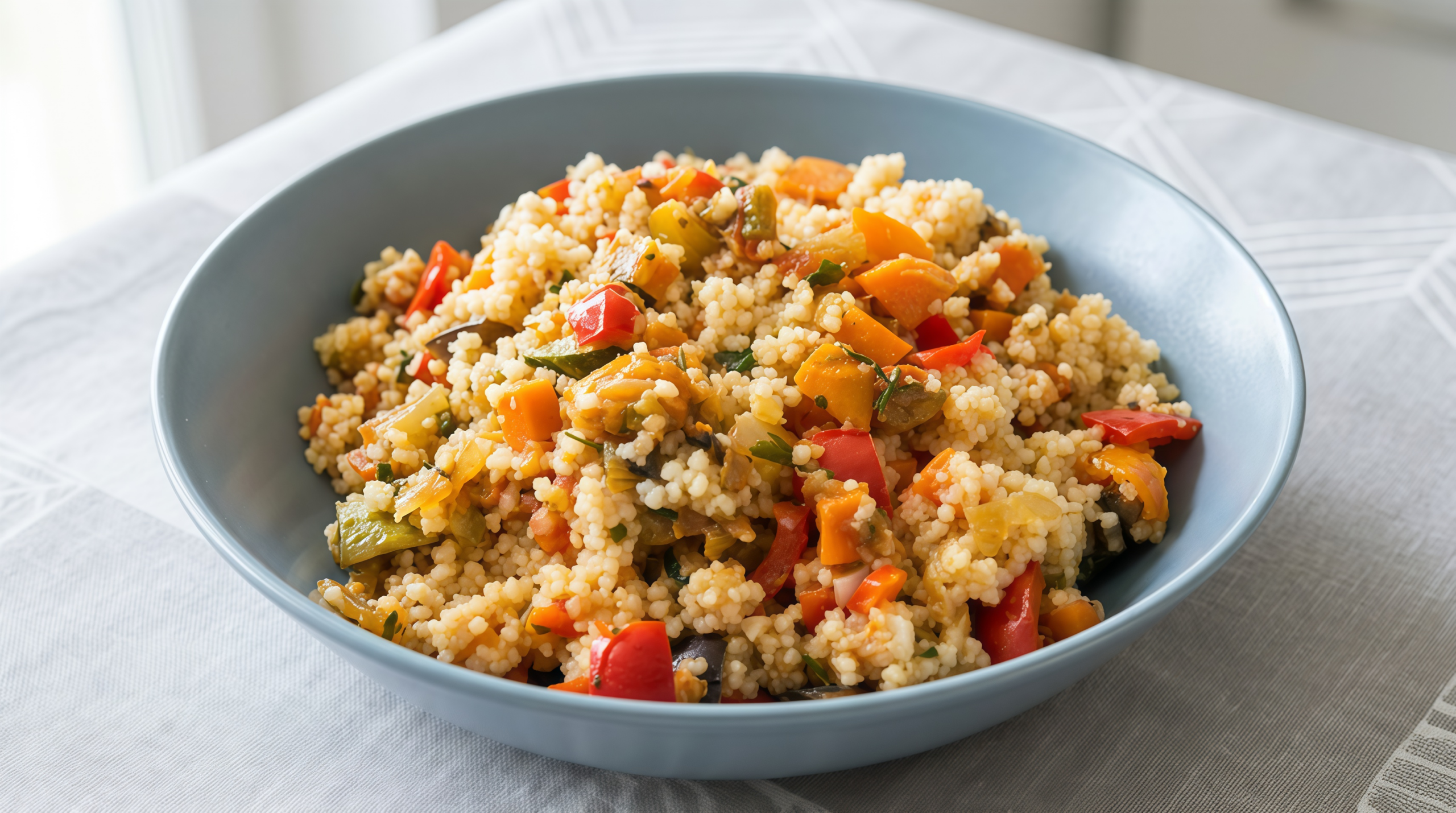
If you are looking for a light but satisfying vegetarian meal, this couscous with stewed vegetables is a great option. Fluffy couscous absorbs all the juices from slowly sautéed onions, carrots, celery, zucchini, eggplant and tomatoes, so every bite is flavorful. Everything is cooked in one pan and comes together in under 40 minutes, perfect for a quick weekday dinner.
How to hydrate couscous so it stays soft and not mushy
The key to good couscous is getting the water ratio and resting time right. Instead of boiling it for a long time, you simply pour boiling water over the dry grains, season lightly and leave them covered. A 1:1 ratio of couscous to water is common, but if you prefer the grains softer and more tender, adding a little extra water works beautifully. After you pour in the boiling water, cover the bowl and resist the temptation to stir too much right away. Let the couscous sit undisturbed for at least 10 minutes so it can absorb the liquid. When the time is up, loosen it gently with a fork to separate the grains. This method gives you couscous that is soft, fluffy and ready to soak up the flavors from the stewed vegetables without turning sticky or clumped.
How long should the vegetables stew for the best taste
After everything is in the pan, it is important to lower the heat and give the vegetables time to cook gently. A fast fry over high heat can leave the center of the vegetables hard while the outside burns. In this recipe, the vegetables stew for about 20 minutes on a low flame, with the pan partially covered. During this time the onions become sweet, the carrots soften, and the eggplant and tomatoes melt into a light sauce that coats every piece. A short extra simmer of about 5 minutes with seasoning added at the end helps all the flavors come together. You should see the vegetables look glossy and tender, but still able to hold their shape when stirred. This slow, patient cooking is what makes a simple mix of vegetables taste deep and comforting without any heavy cream or cheese.
How to combine couscous and vegetables so the texture stays fluffy
Once the couscous is hydrated and the vegetables are fully stewed, it is time to bring everything together. The couscous should be fluffed with a fork so the grains separate and no large clumps remain. Turn off the heat under the pan with vegetables before adding the couscous. This prevents the grains from sticking to the bottom or drying out too much. Gently fold the couscous into the vegetables with a spatula or large spoon instead of stirring aggressively. The goal is to coat every grain with a bit of the flavorful vegetable juices while keeping the overall texture airy. If the dish looks a little dry, you can drizzle in a small splash of hot water or broth and another swirl of olive oil. When mixed correctly, each forkful holds a good balance of tender vegetables and fluffy couscous.
Tips for serving couscous with stewed vegetables
When serving, small details can really elevate this simple dish. A sprinkle of freshly chopped parsley and a few basil leaves add a bright, herbal aroma that wakes up the flavors. You can serve the couscous as a stand‑alone main, or pair it with a simple green salad for extra freshness. If you have guests who are not strictly vegetarian, you can offer some grilled halloumi, baked tofu, or a bit of roasted chicken on the side, while keeping the core recipe the same. The dish works both as a warm dinner and as a room‑temperature option for lunch boxes or picnics. Leftovers often taste even better the next day, after the couscous has had more time to absorb the vegetable juices. Serve it in deep bowls so you catch every bit of sauce at the bottom.
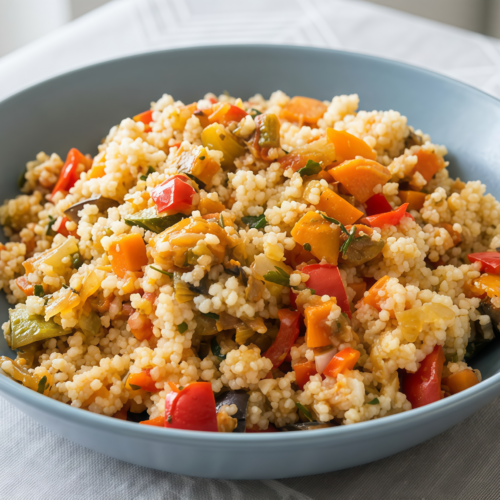
Couscous with Stewed Vegetables in a Skillet
Ingredients
- 1¼ cups dry couscous
- 1 medium carrot diced
- 2 bell peppers diced
- 1 small zucchini diced
- 1 small eggplant diced
- 1 medium onion finely chopped
- 4 garlic cloves minced
- 2 cups sliced celery stalks
- 4 ripe tomatoes chopped
- 1 bunch fresh basil
- 1/4 cup fresh parsley chopped
- 1 teaspoon dried oregano
- extra‑virgin olive oil for sautéing
- salt to taste
- freshly ground black pepper to taste
Instructions
- Add the couscous to a large bowl, sprinkle with a pinch of salt and the dried oregano, then pour over enough boiling water to cover. Use about 1¼ cups (300 ml) of water for 1 cup of couscous, or slightly more if you like it softer. Cover the bowl and let the couscous sit for 10–20 minutes, then fluff with a fork.
- While the couscous is resting, dice all the vegetables into small pieces. Heat a generous drizzle of olive oil in a large skillet. Add the onion, carrot and celery and sauté until they start to soften.
- Add the zucchini and bell peppers to the skillet and cook for a few minutes, stirring occasionally. Then add the eggplant and tomatoes, reduce the heat and let the vegetables stew gently for about 20 minutes, until tender and saucy.
- Season the vegetables with salt and freshly ground black pepper to taste and let them cook for another 5 minutes. Turn off the heat, add the fluffed couscous to the skillet and gently mix until well combined.
- Just before serving, stir in the chopped parsley and garnish with fresh basil leaves. Serve warm as a light vegetarian main or as a side dish.
Frequently Asked Questions
Yes, this couscous is a good option for a lighter way of eating because it relies on plenty of vegetables and hydrated couscous, cooked without deep‑frying in lots of oil. You can reduce the amount of olive oil if you want to cut calories even more. It’s also a nice alternative to heavy meat dishes during the week, while still giving you a warm, filling meal.
Couscous itself is made from wheat, so it is not gluten‑free. To keep the spirit of the recipe but avoid gluten, you can use cooked quinoa, millet or even small gluten‑free pasta shapes instead. Prepare them according to the package instructions, then toss them with the stewed vegetables in exactly the same way.
Let the couscous cool completely, then transfer it to an airtight container and refrigerate it for up to three days. For reheating, add a tablespoon of water, cover and warm it gently in the microwave or on the stovetop, stirring once, until the couscous turns soft and steamy again. You can also enjoy leftovers at room temperature as a salad‑style dish.