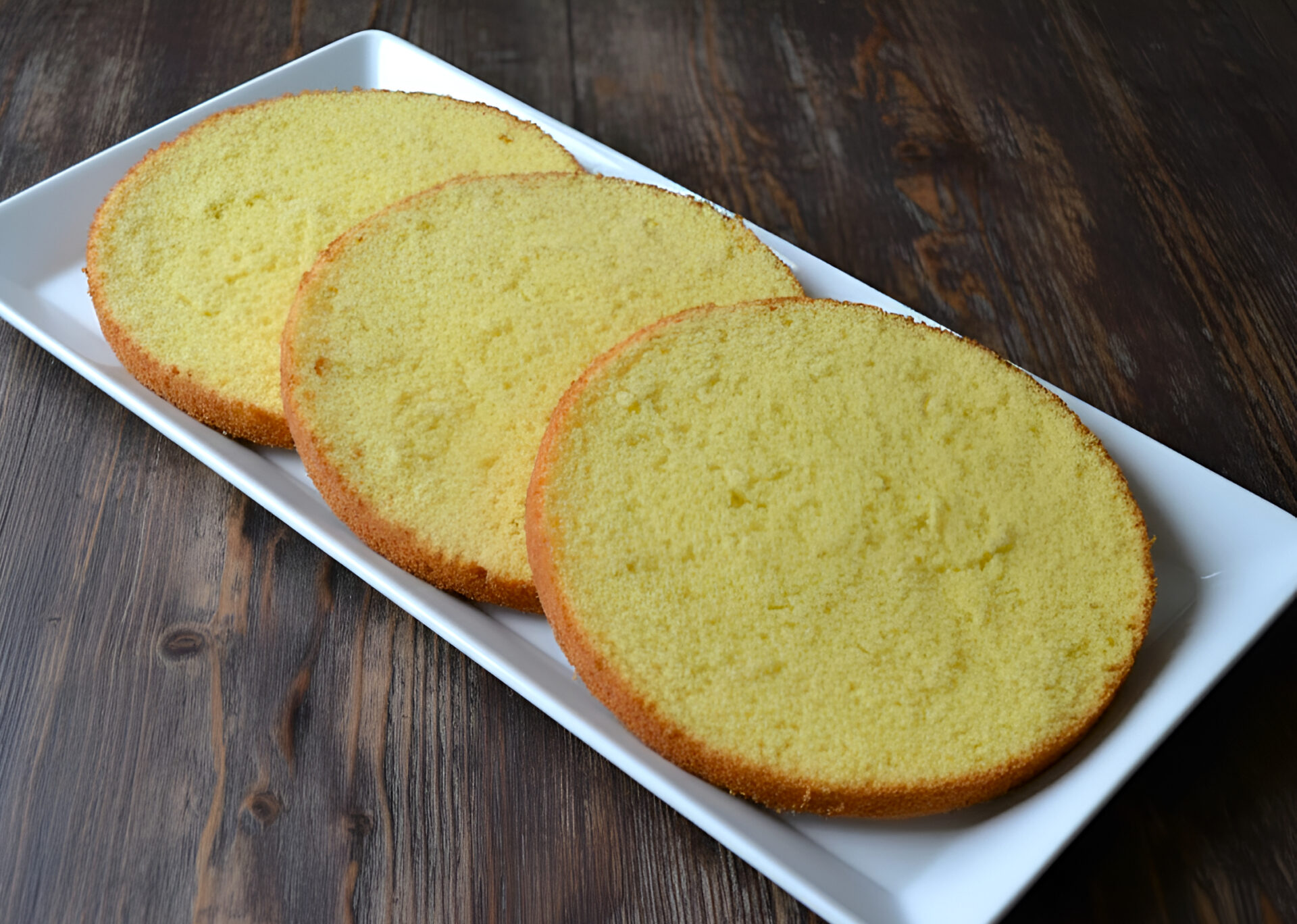
An eggless sponge cake relies on chemistry instead of eggs: acidic kefir meets baking soda and the batter puffs up in the oven. The result is a soft, moist crumb that is sturdy enough to slice into layers.
Everything is whisked together in a single bowl, with no mixer required, and optional additions such as chopped nuts, raisins or poppy seeds go in at the end. It is a flexible base for any cake you want to build.
Ingredients
For the sponge
- 1 cup kefir
- 1 cup sugar
- 2 tbsp vegetable oil
- 1 tsp baking soda slaked with a few drops of vinegar
- 1½ cups all-purpose flour
Optional
- chopped walnuts raisins or poppy seeds
Instructions
- Pour the kefir into a large bowl, add the sugar, oil, slaked baking soda and flour, then mix well with a whisk or a mixer until the mixture is smooth and free of lumps. If you like, you can fold chopped nuts, raisins or poppy seeds into the batter at this point, stirring gently to distribute them evenly.
- Grease a pan with oil (and, optionally, line it with parchment paper), pour in the batter and level the surface. Put the pan in an oven preheated to 350°F (180°C) and bake the sponge until it turns a nice golden color and passes the toothpick test (a toothpick inserted in the center comes out clean).
- Let the sponge cool completely in the pan or on a rack, then cut it into three layers and spread them for whatever cake you want to make.
Notes
- Mix until the batter is completely smooth.
- Slake the baking soda with a few drops of vinegar.
- Bake until golden and a toothpick comes out clean.
- Cool completely before cutting into layers.
- Toss raisins in a little flour before folding them in.
- Wrap tightly to store for up to 3 days in the refrigerator.
Nutrition
Nutrition information is automatically calculated, so should only be used as an approximation.
How does an eggless sponge cake rise?
Acidic kefir reacts with baking soda to produce gas that lifts the batter. The vinegar used to slake the soda adds a little extra lift.
Because the reaction starts at once, get the pan into the oven soon after mixing.
Why use kefir in an eggless sponge cake?
Kefir adds moisture and the acidity the baking soda needs. Together, they replace what eggs would normally provide.
Thinned plain yogurt can stand in if you have no kefir.
Can you use eggless sponge cake for layer cakes?
Yes, once it has cooled completely, it cuts cleanly into three layers. A cold sponge crumbs less than a warm one.
Brush the layers with syrup or spread them with any cream you like.
How do you know an eggless sponge cake is baked?
A toothpick inserted in the center comes out clean and the top is golden. Check at the end of the baking time, since ovens vary.
The cake should also spring back slightly when touched.
Can you add nuts, raisins or poppy seeds?
Yes, fold in chopped walnuts, raisins or poppy seeds gently once the batter is smooth. Stir just enough to spread them evenly.
Toss raisins in a little flour first so they do not sink.
Is eggless sponge cake gluten-free?
No, it uses regular wheat flour, which contains gluten. A gluten-free version would need a tested recipe with adjusted ingredients.
Do not simply swap the flour one for one.
Frequently asked questions
Yes. Cool it completely, then slice it into three layers and fill them with the cream of your choice.
It adds moisture and acidity that activates the baking soda, helping the cake rise.
No. It uses regular wheat flour. A gluten-free version needs a different, tested recipe.