 Carmen
There’s nothing quite like pulling a warm, golden baguette out of your own oven, especially when it has that signature crackly crust and pillowy soft center. This homemade French baguette recipe strips away the intimidation factor of bread baking and breaks it down into simple, foolproof steps. Using just milk, flour, yeast, salt, and an egg yolk for that beautiful golden finish, you’ll get bakery-quality bread without a trip to the store. It’s perfect for breakfast with jam and tea, or turned into a hearty sandwich later in the day.
What You Need for a Perfect Homemade French Baguette
A great baguette starts with just five ingredients: whole milk, active dry yeast, all-purpose flour, salt, and an egg yolk for brushing. The milk gives the crumb a slightly tender texture and subtle sweetness compared to an all-water dough, which is more traditional but drier. Active dry yeast is essential here, and it needs to be fresh and properly activated in warm (not hot) milk to guarantee a good rise. All-purpose flour works perfectly for structure without making the bread too dense or too chewy. The egg yolk, brushed on before baking, is what gives the crust that beautiful golden-brown shine you see in bakery windows. Keep your ingredient list simple and don’t be tempted to add extra flavorings, since the magic of a baguette lies in its clean, simple taste and perfect texture contrast between crust and crumb.
How to Mix and Knead the Dough Correctly
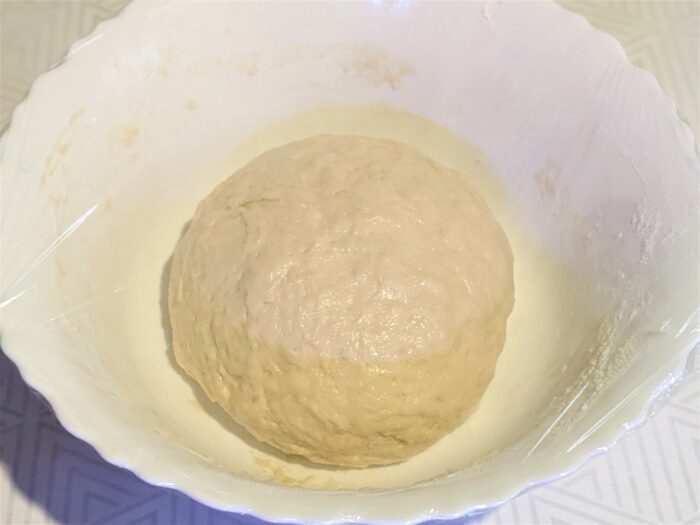
Start by combining the yeast with the warm milk, then add the flour and salt, mixing until a rough dough forms. Kneading is where the real transformation happens, as this develops the gluten strands that give the baguette its chewy interior and structure to hold its shape while baking. Knead the dough until it becomes smooth, elastic, and slightly tacky but not sticky to the touch, which usually takes several minutes of steady work. Don’t rush this step, since underdeveloped gluten leads to a baguette that’s dense or falls flat during baking. If the dough feels too sticky, resist adding too much extra flour, as this can dry out the final crumb. A well-kneaded dough should spring back slowly when you poke it gently with a finger, signaling it’s ready for its first rise.
The Secret to a Perfect Double Rise
This recipe relies on two separate rises to build flavor and the right airy texture. Cover the dough and place it in a warm oven (turned off, just for gentle warmth) for about 40 minutes, allowing it to expand significantly. After this first rise, punch the dough down gently to release the built-up gas, then let it rest for another 30 minutes. This second rise is crucial because it relaxes the gluten further and continues developing flavor, while also making the dough easier to shape into long baguette forms. Skipping or shortening either rise is one of the most common reasons homemade baguettes turn out flat or dense instead of light and airy. Patience here pays off directly in the final texture of your loaves.
Shaping the Dough Into Two Baguettes
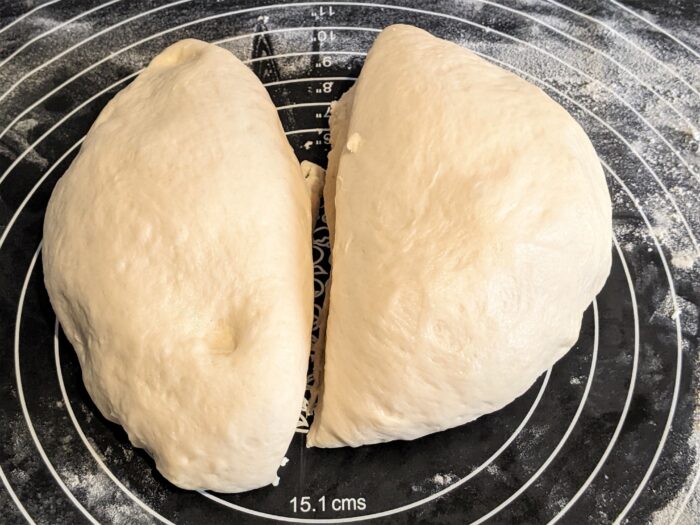
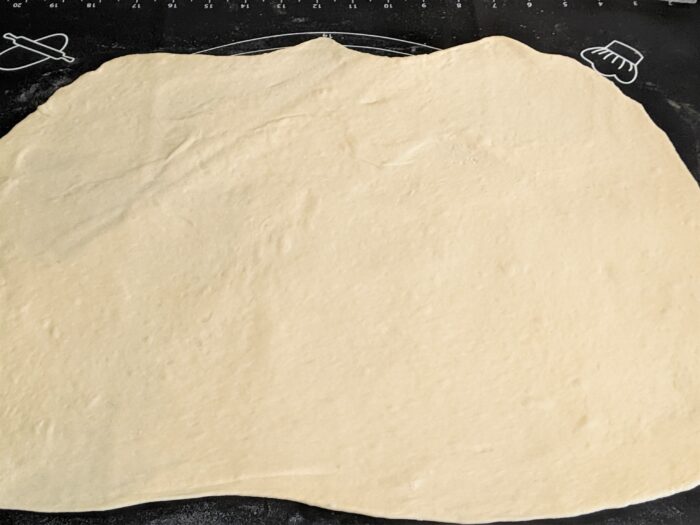
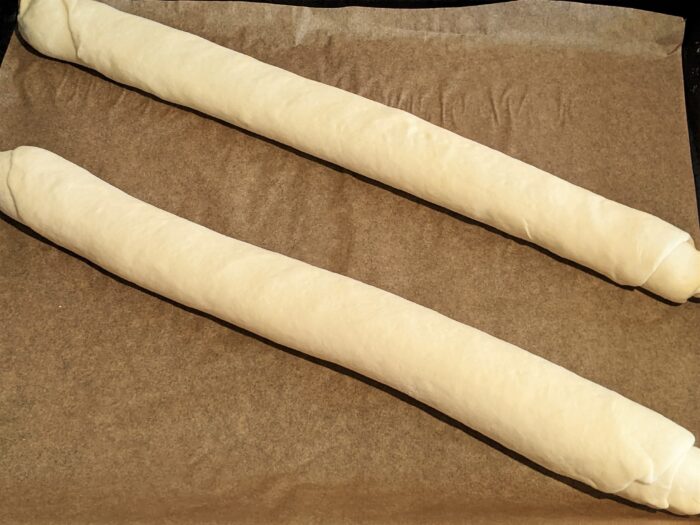
Once the dough has finished its second rise, transfer it to a lightly floured silicone mat or clean work surface and divide it into two equal portions for two baguettes. While shaping one piece, cover the other with plastic wrap so it doesn’t dry out and form a skin, which can prevent an even rise later. To shape each baguette, flatten the dough gently into a rectangle, then roll it up tightly from one long edge to the other, pinching the seam firmly closed. Sealing the edges well is essential, since any weak spots can cause the baguette to split open unevenly in the oven instead of expanding along the scored lines. Repeat the same shaping technique for the second piece, keeping both loaves roughly the same length and thickness for even baking.
Baking Tips for a Crispy Crust and Soft Crumb
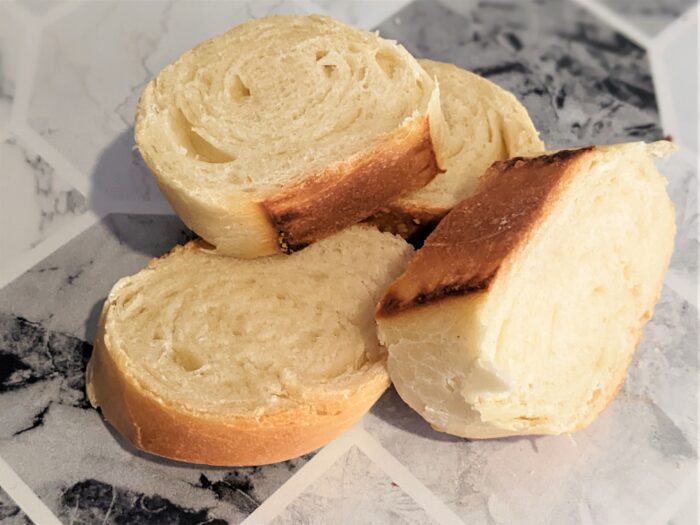
Bake the baguettes in a preheated oven for about 30 minutes, until the crust turns a deep golden brown and sounds hollow when tapped on the bottom. One important rule: avoid opening the oven door during the first 15 minutes of baking, since the sudden temperature drop can cause the dough to collapse or bake unevenly. For an extra-crispy crust, some bakers add a small pan of water to the oven to create steam, though this recipe bakes beautifully even without that step. Let the baguettes cool slightly on a wire rack before slicing, since cutting into hot bread too soon can make the crumb feel gummy rather than light. The contrast between the crackly crust and the soft, airy interior is the whole point of a great baguette.
How to Store and Serve Your Homemade Baguette
Fresh baguette is at its absolute best on the day it’s baked, when the crust is still shatteringly crisp. Serve it warm with butter and jam for breakfast, alongside a bowl of soup, or sliced into sandwiches with smoked salmon or your favorite deli meats. To store leftovers for a day or two, wrap the baguette in a clean cotton towel or place it in a paper bag at room temperature rather than the fridge, since refrigeration dries bread out much faster. If the crust softens after a day, a quick few minutes in a hot oven will crisp it right back up. Avoid plastic bags for storage, as they trap moisture and turn the crust soft and chewy instead of crisp.
Ingredients
- 1½ cups warm milk
- 1 teaspoon fine salt
- 2 teaspoons active dry yeast
- 4 cups all-purpose flour spooned and leveled
For brushing:
- 1 egg yolk
Instructions
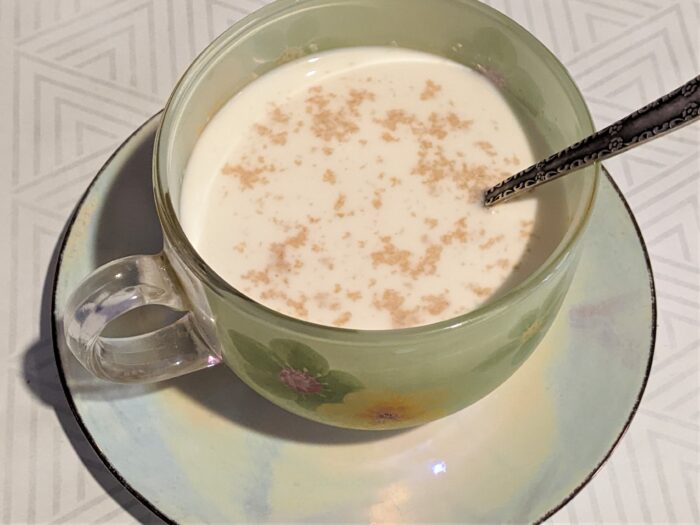
- Stir the yeast into the warm milk, then add the flour and salt and knead until you get a smooth, elastic dough.

- Cover the bowl with plastic wrap and place it in a warm oven for about 40 minutes. Knead the risen dough again, then let it rise a second time for another 30 minutes.
- Turn the dough out onto a silicone mat and knead briefly, then cut the ball of dough into 2 equal pieces.
- Cover one piece with plastic wrap so it does not dry out. Flatten the other piece into a rough rectangle, roll it up tightly into a log and pinch the seam well so the baguette does not open while baking.
- Form the second baguette in the same way. Place both baguettes on a baking tray and let them rest for at least 20 minutes.
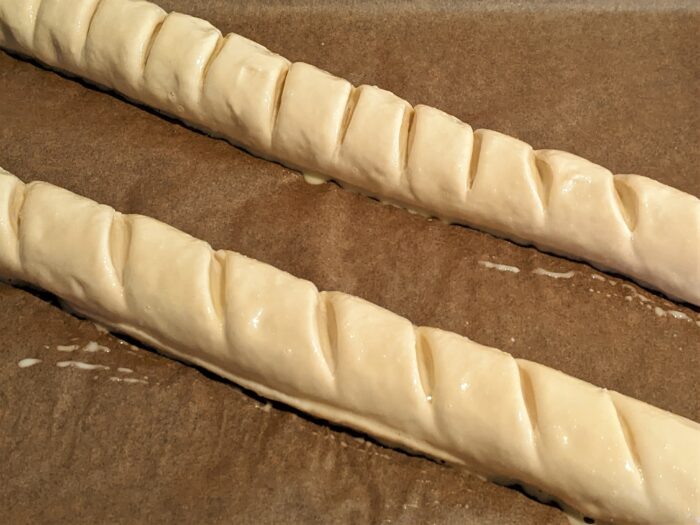
- Brush the baguettes with the egg yolk mixed with a little milk, then use a sharp knife to make a few diagonal cuts on top.
- Bake the baguettes in a preheated oven for about 30 minutes, until golden and crisp.
- Serve the baguettes warm with tea and jam, or slice them and make sandwiches with salted red fish.
Notes
- Make sure the milk is only lightly warm, not hot, or it can kill the yeast before it activates.
- Don’t skip either rise; both are essential for a light, airy crumb instead of a dense loaf.
- Seal the shaped dough seams firmly to prevent the baguette from bursting unevenly in the oven.
- Avoid opening the oven door during the first 15 minutes of baking to prevent the dough from collapsing.
- Store leftover baguette in a cloth or paper bag, never plastic, to keep the crust crisp longer.
- Refresh day-old baguette by warming it in the oven for a few minutes to restore crust crispness.
Nutrition
Nutrition information is automatically calculated, so should only be used as an approximation.