 Carmen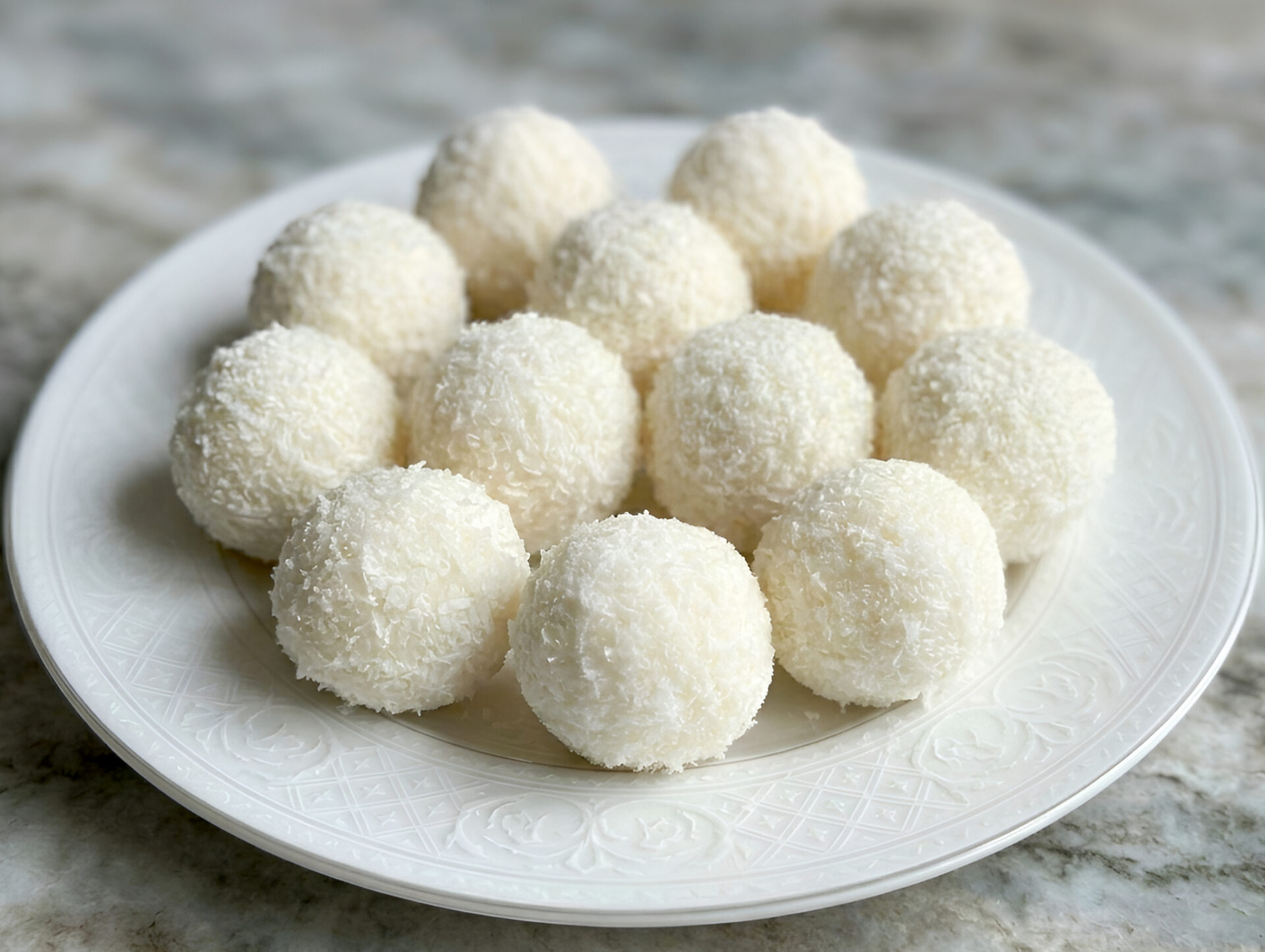
Some desserts feel fancy but take almost no effort, and this is exactly that kind of treat. Condensed milk and softened butter come together into a rich coconut dough that firms up in the fridge overnight, then gets rolled into little truffles with a nutty surprise inside. Perfect for holidays, gifting, or simply satisfying a coconut craving without turning on the oven.
How to Get the Butter and Condensed Milk Perfectly Smooth
Getting a lump-free base is the single most important step for silky truffles. Start with butter that’s cold but not rock-hard — firm enough to cube cleanly, but soft enough to mash easily with a fork within a minute or two. Room-temperature condensed milk is equally important; if it’s too cold, it won’t blend smoothly with the butter and can leave a grainy texture. Whisking briskly with a metal whisk, rather than stirring gently, helps break down any remaining butter lumps quickly and evenly. If small pieces of butter persist, let the bowl sit at room temperature for five minutes before whisking again. A smooth base at this stage means fewer streaks and a more even coconut flavor once everything else is folded in.
The Secret to the Right Coconut Truffle Texture
The ideal Raffaello mixture should be thick, sticky, and just barely holding its shape — not runny, but not stiff either. This texture comes from folding the shredded coconut in gently rather than stirring vigorously, which keeps the coconut from breaking down and releasing extra moisture. If the mixture feels too loose after adding the coconut, resist the urge to add more right away; chilling firms it up significantly. On the other hand, if it feels overly dry or crumbly, a small splash of extra condensed milk can loosen it back up. The goal is a dough that’s cohesive enough to scoop but soft enough to shape into a smooth ball with your hands once chilled.
Why Chilling Time Matters So Much
Patience is the real secret ingredient in this recipe, and skipping the chilling step is the most common mistake. A full 24 hours in the refrigerator allows the butter to re-solidify and the coconut to absorb some of the condensed milk, which firms the mixture enough to hold a ball shape without collapsing. The one-hour freezer shortcut works in a pinch, but the texture will be slightly softer and stickier to handle. Covering the bowl tightly with plastic wrap during chilling isn’t just about food safety — it also prevents the mixture from picking up odors from the fridge and keeps the surface from drying out or forming a skin.
Choosing and Preparing the Nutty Centers
Almonds and cashews were chosen here not just for flavor but for how they play off the sweet, coconut-heavy exterior. Whole almonds bring a firm, slightly bitter crunch that cuts through the sweetness, while cashews offer a softer, buttery bite that echoes the richness of the truffle itself. There’s no need to toast or season the nuts beforehand — their natural flavor is enough once wrapped in coconut. Alternating nut types between batches also makes it easy to tell them apart later, which is a nice touch if you’re serving a mixed platter or gifting a box. If nut allergies are a concern, the centers can be left out entirely without changing the outer texture.
Step-by-Step Shaping Technique for Neat Truffles
Shaping consistent, professional-looking truffles is easier than it looks once you know the trick. Scoop the chilled mixture with a spoon rather than your hands first, since the initial mixture is sticky and easier to portion with a utensil. Once portioned, roll it briefly between your palms to form a dense, compact ball — working quickly helps prevent the mixture from warming and becoming too soft. Rolling in coconut flakes at this stage gives an even coating and makes the next step, inserting the nut, much cleaner. Keeping your hands slightly damp or lightly dusted with coconut can also help prevent excessive sticking during shaping.
The Two-Coating Method for the Signature Coconut Crust
What separates these truffles from a simple coconut ball is the double-coating technique used after the nut is inserted. Slicing the ball open, placing the nut in the center, and gently reshaping it around the nut ensures the filling stays centered rather than sinking to one side. Rolling the ball in coconut a second time after resealing it covers any seam left from cutting and gives a thicker, more even coconut crust all around. This second coat is also what gives the finished truffle its classic snowy, textured appearance rather than a smooth or patchy surface. Taking the extra minute for this step makes a noticeable difference in both looks and bite.
Storage Tips and Serving Suggestions
These truffles keep beautifully in the refrigerator for up to a week when stored in an airtight container, making them a convenient make-ahead treat for gatherings or gifting. For longer storage, they also freeze well for up to two months — simply thaw in the fridge for a few hours before serving. Let them sit at room temperature for five to ten minutes before eating, as this softens the texture slightly and brings out more of the coconut flavor. They pair nicely with coffee or tea and make an elegant addition to a holiday dessert platter or homemade candy box.
Ingredients
- 1 can sweetened condensed milk
- 1 cup unsalted butter cold and firm
- 2¼ cups unsweetened shredded coconut
- ½ teaspoon vanilla powder
- ¼ cup whole almonds
- ¼ cup cashew nuts
Instructions
- Cut the cold, firm butter into small cubes.
- Mash the butter with a regular fork until it softens and becomes creamy.
- Pour the room‑temperature sweetened condensed milk into a mixing bowl, add the softened butter and whisk well with a metal whisk until the butter pieces are fully dissolved and the mixture is smooth.
- Add the vanilla powder and about 1 ½ cups (150 g) of shredded coconut to the bowl.
- Gently fold with a spoon from bottom to top until the coconut is evenly moistened. You should get a thick, viscous and sticky mixture that holds together.
- Cover the bowl tightly with plastic wrap so the surface is fully sealed and refrigerate for 24 hours, or place it in the freezer for about 1 hour if you want to speed things up.
- Before shaping the Raffaello balls, prepare the nuts: almonds and cashews. This filling gives the candies a divine aroma, a subtle crunch and adds nutrients like vitamins B and E that support brain function, immunity and skin health.
- Scoop some of the chilled, firm coconut mixture with a teaspoon and gently roll it between your palms into a compact ball, then roll it in shredded coconut.
- Carefully cut the ball open with a small knife and place one nut in the center, alternating between almonds and cashews from ball to ball.
- Roll each ball again in the remaining shredded coconut until well coated, using up all the prepared mixture in the same way.
Notes
- For a stronger vanilla flavor, use vanilla paste instead of powder or extract.
- If the mixture feels too soft after chilling, add a tablespoon or two of extra coconut and chill again.
- Serve the candies slightly chilled; they taste best when not fully at room temperature.
- For a more authentic look, use blanched almonds without skins inside the balls.
- You can lightly toast some of the coconut for a deeper flavor, but keep part of it untoasted for the white coating.
- Adjust the size of the balls depending on the occasion: small bites for party trays, slightly larger for dessert plates.
Nutrition
Nutrition information is automatically calculated, so should only be used as an approximation.