
Smetannik is the sour cream cake of Russian and Ukrainian celebration tables, and the part everyone remembers is how soft it becomes: thin, tender layers that spend a night with a thick sour cream frosting until they are almost melting. My version uses a dough made with sour cream and baking powder that I rest for 30 minutes, then roll into six balls and bake as thin rounds; trimming the edges leaves enough dough for a seventh layer. The cream is only sour cream and sugar, beaten until thick, and the cake is finished with a simple dark chocolate glaze. It serves 10 and needs a night in the fridge.

Ingredients
For the cake layers:
- ¾ cup sour cream 20% fat
- 2 tsp baking powder
- 2 large eggs
- 1 cup granulated sugar
- 3½ tbsp butter melted
- 2 tbsp sunflower oil
- 4 cups all‑purpose flour plus more for rolling
For the sour cream filling:
- 4 cups full‑fat sour cream 25% fat
- 1 cup granulated sugar
- warm milk for brushing the layers
For the chocolate glaze:
- 3 tbsp butter
- 1 bar dark chocolate broken into small pieces
Instructions
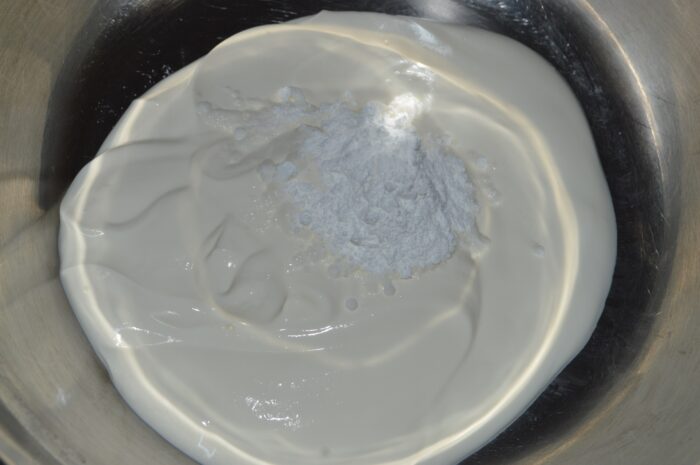
- Put the 200 g of sour cream and the baking powder in a bowl.

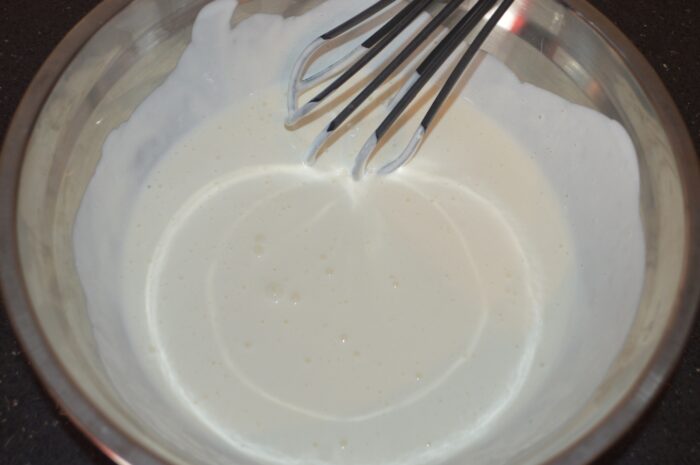
- Whisk well; air bubbles will form, which means the baking powder is reacting with the sour cream.
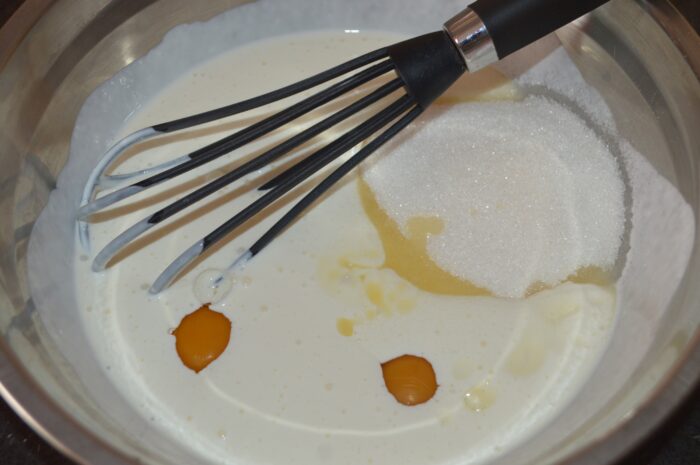
- Add the eggs, sugar, oil and melted butter.
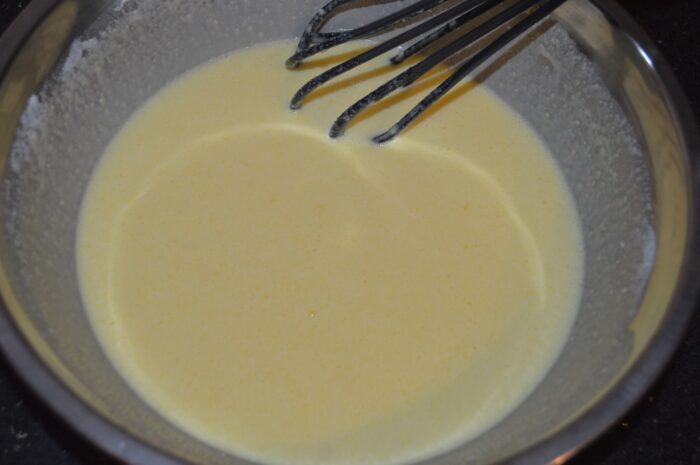
- Mix well until smooth.
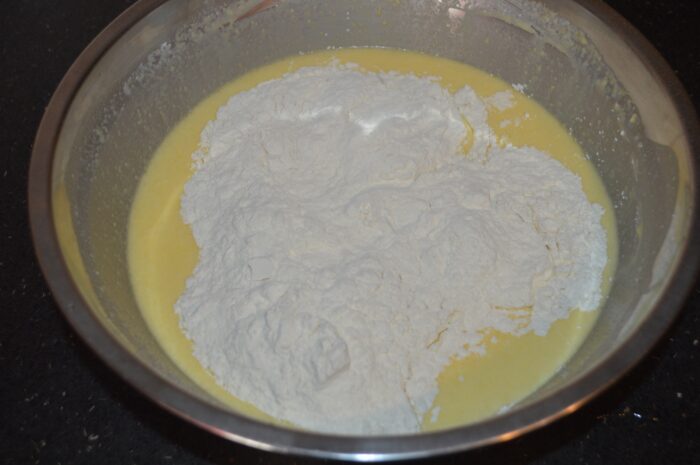
- Then add the flour.
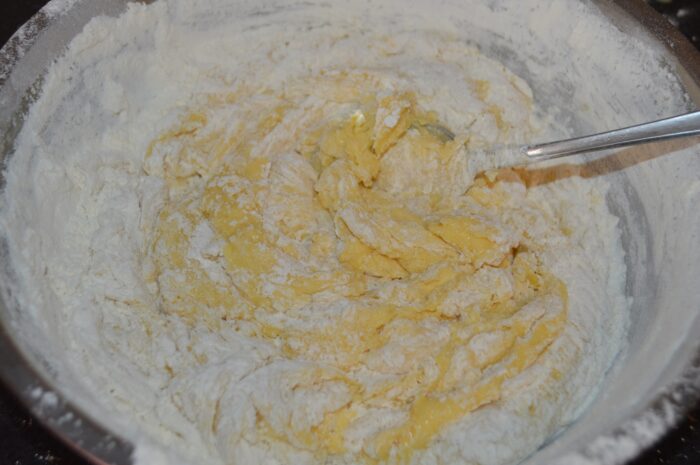
- Start mixing with a spoon, then knead with your hands.
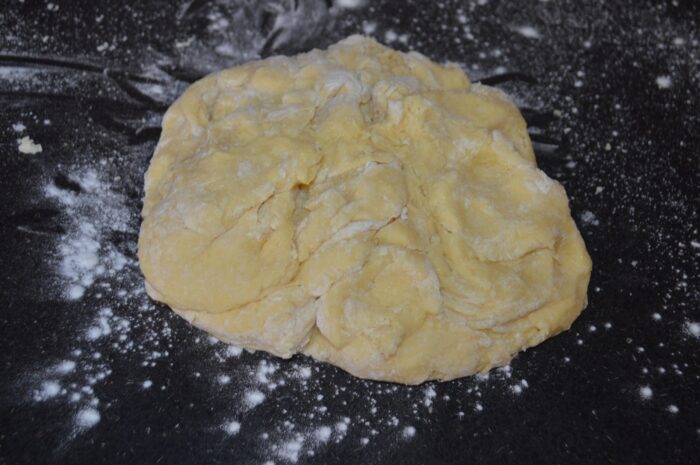
- Sprinkle a little flour on the counter and place the dough on it.
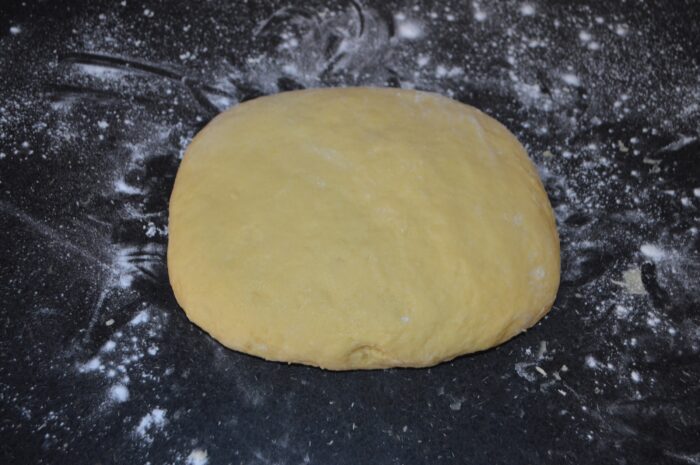
- Knead the dough briefly until smooth. Cover it with a towel and let it rest for 30 minutes.
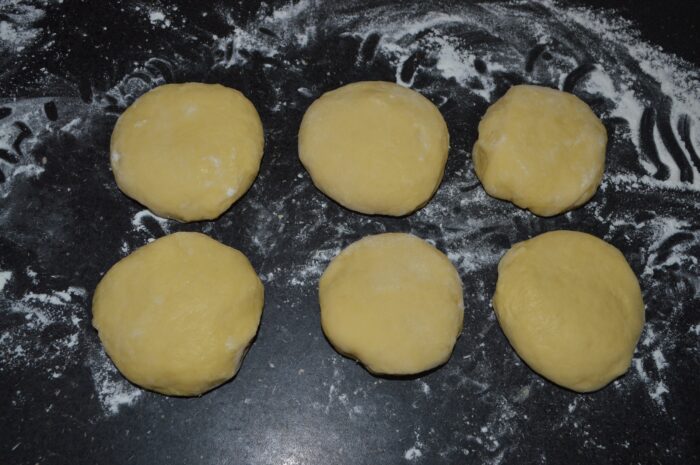
- After resting, divide the dough into 6 pieces and shape them into balls.
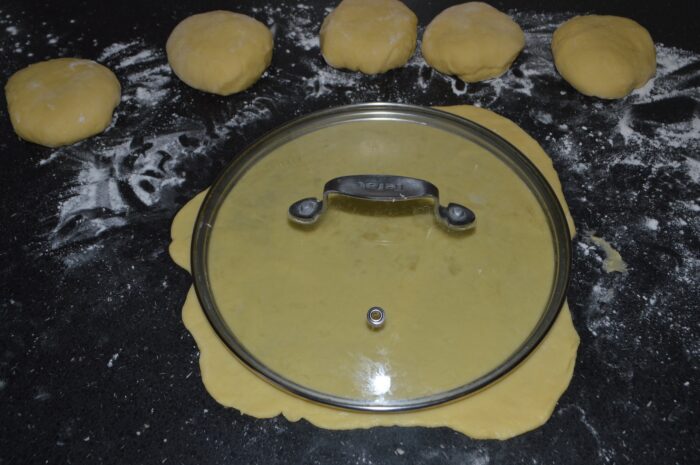
- Roll each ball out with a rolling pin, sprinkling a little flour underneath so it does not stick, and use a lid or a large round plate to cut a circle.
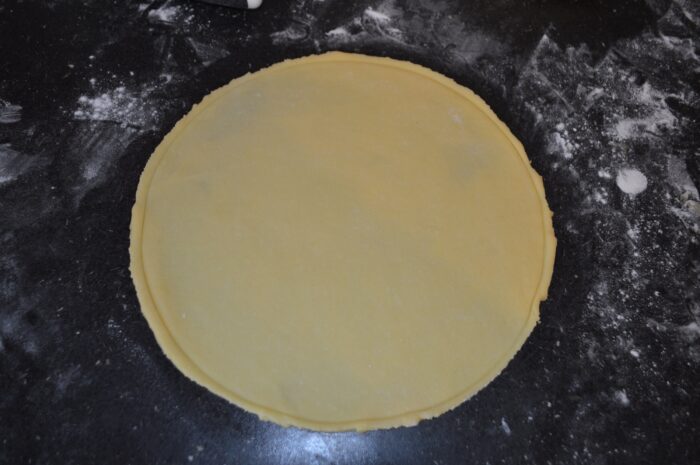
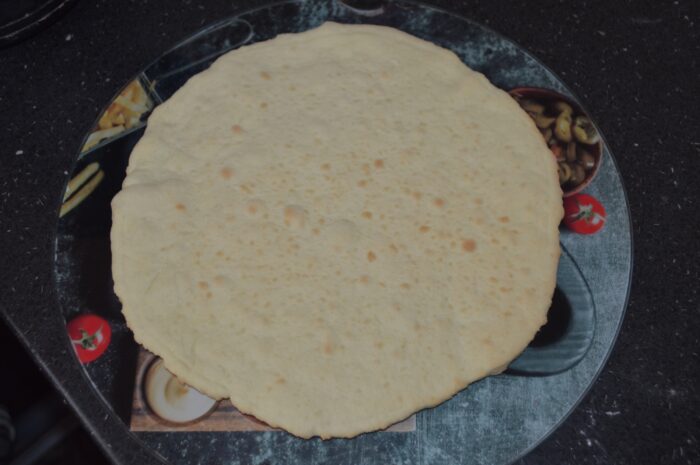
- This is what the circle should look like. Now bake in a preheated oven at 400°F (200°C) for 7 to 8 minutes. Do this with each ball of dough. You start with 6, but after trimming the edges there is enough dough left for another layer, so you get 7 in total.
- Make sure they do not burn; it depends on your oven.
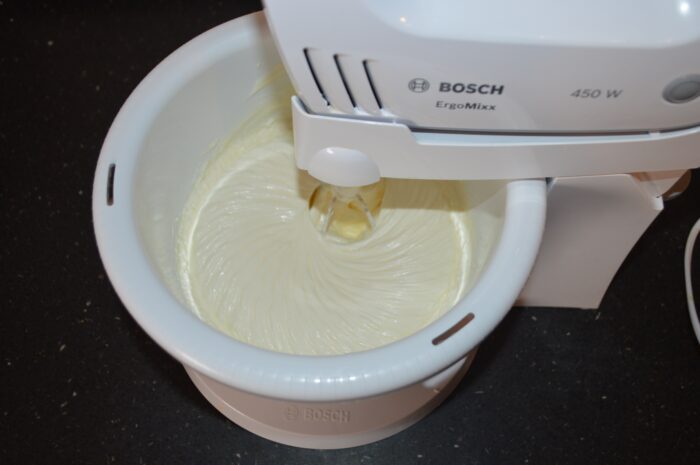
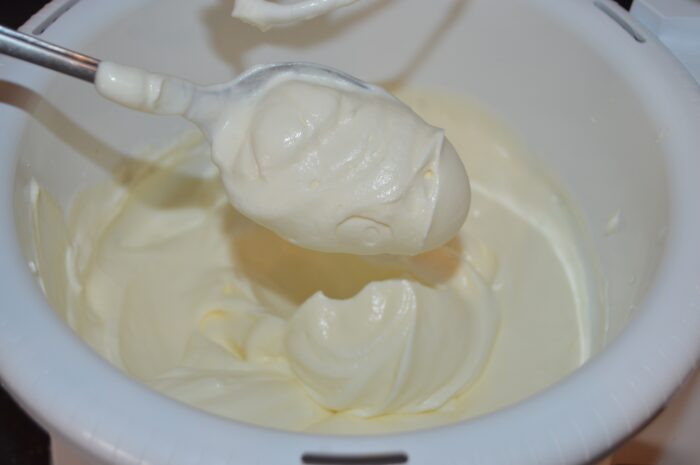
- Meanwhile, make the cream. You need a mixer. Put in the sour cream and sugar and beat first on low speed for 1 minute, then on high speed for 8 to 10 minutes.
- For a thicker cream, drain the sour cream in cheesecloth for 4 to 5 hours, or better overnight, so the whey runs out. You will get a thick cream.
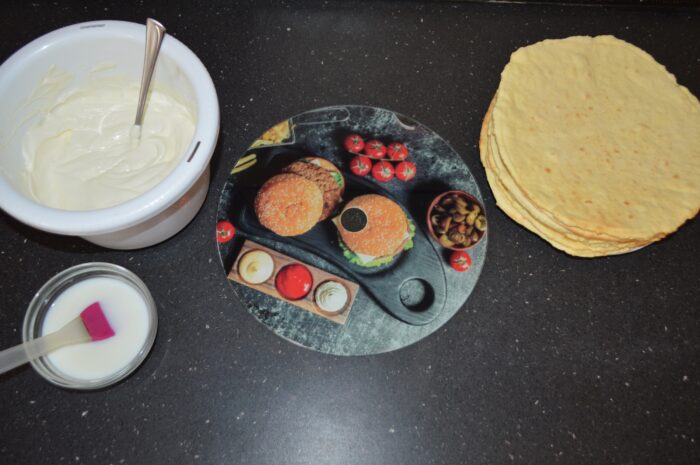
- Prepare your work surface.
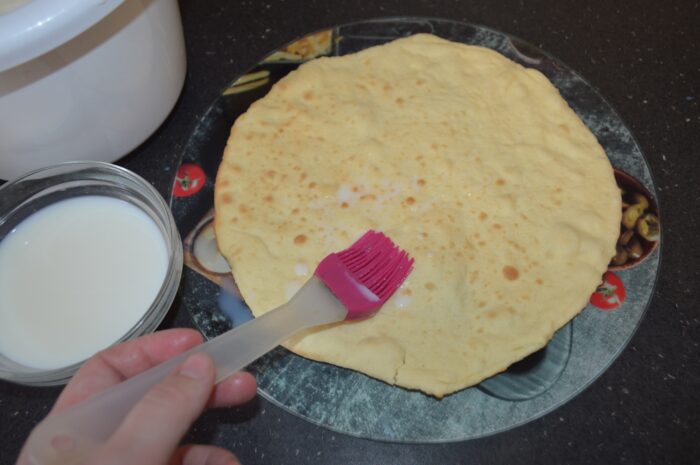
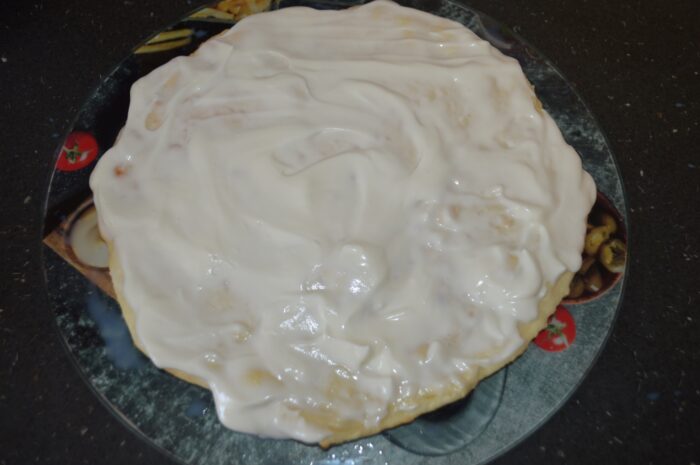
- Place a little cream on the serving plate, then the first layer. Brush each layer with warm milk.
- Then spread with cream.
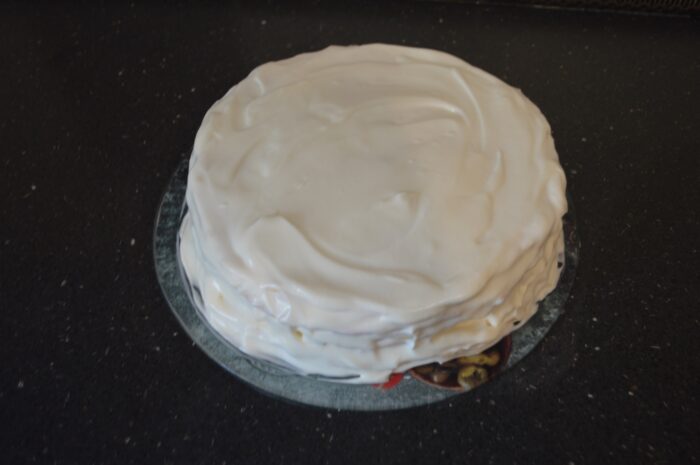
- Repeat with all 7 layers.
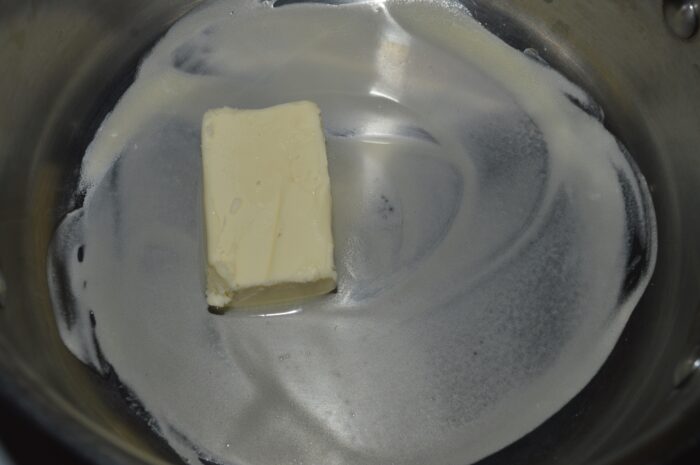
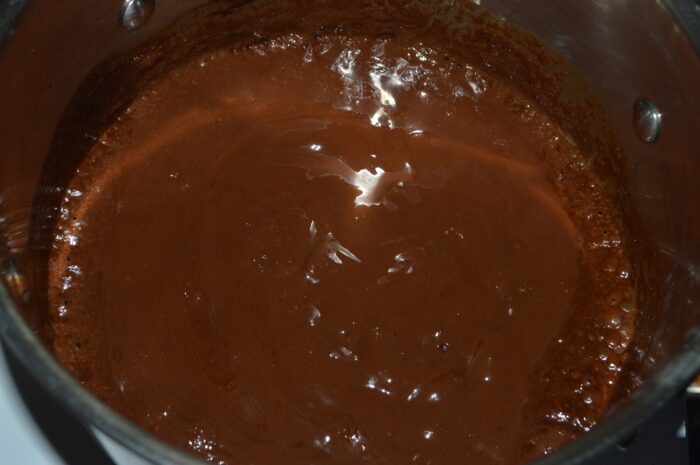
- Melt the butter in a small saucepan.
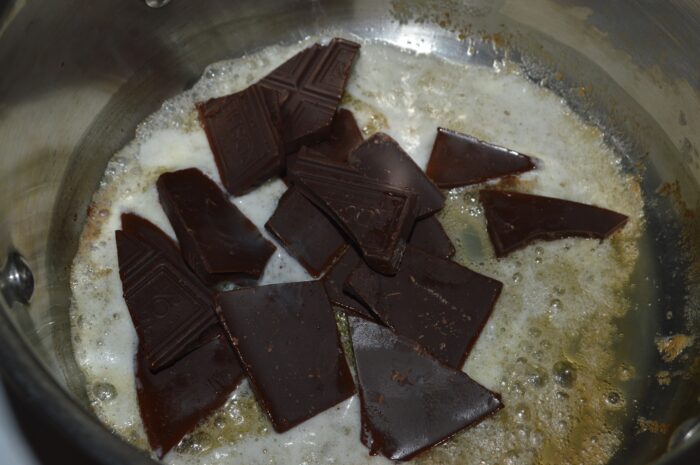
- Then break the dark chocolate into small pieces so it melts faster.
- The glaze is ready.
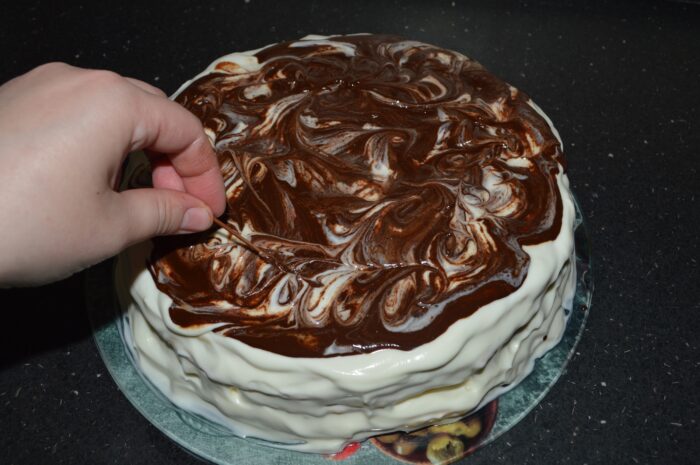
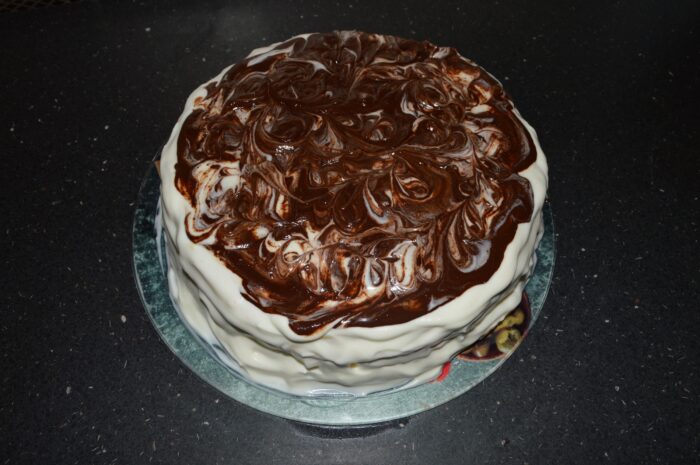
- Pour the glaze over the cake and smooth it with a spoon. Then use a wooden skewer to make small circles, or decorate as you like.
- Refrigerate the cake for 5 to 6 hours, or better overnight.
Notes
- Rest the dough for 30 minutes before rolling.
- Roll the layers very thin; trimmings make the seventh layer.
- Bake each layer until just golden; ovens vary, so watch them.
- Beat the sour cream with the sugar, then drain it for a thicker cream.
- Brush each layer with warm milk before spreading the cream.
- Chill for 5 to 6 hours, or overnight, before slicing.
Nutrition
Nutrition information is automatically calculated, so should only be used as an approximation.
What is Smetannik cake, and how is it different from honey cake?
Smetannik is a layer cake built on sour cream: sour cream goes into the dough and into the frosting, and the name comes from the Russian word for sour cream. The layers bake thin and a little dry, and the frosting softens them overnight into a tender, moist cake.
It is often confused with medovik, the honey layer cake, because the two share the same layered shape and sour cream frosting. The difference is in the dough: medovik layers are flavored with honey, while smetannik layers rely on sour cream and sugar for a milder, creamier taste.
Which sour cream should you use, 20% or 25%?
Use about 20% sour cream in the dough and 25% in the frosting. The dough only needs the sour cream for tenderness, but the frosting needs the fat to thicken and hold its shape.
Sour cream sold in some countries, including many in the US, is lower in fat. If yours is, choose the thickest full-fat product you can find for the frosting and drain it longer. Avoid light or reduced-fat versions here: they stay watery.
How do you make the sour cream frosting thick enough?
Two things help most. Beat the sour cream with the sugar first on low and then on high for several minutes, until it thickens. Then, for the thickest result, drain the sour cream in cheesecloth for 4 to 5 hours, or overnight, so the whey runs out.
The cream should be thick enough to spread on the layers without running off the edges. A cream that is too thin will leak out of the cake as the layers soak.
Why do the cake layers turn so soft overnight?
Each layer is brushed with warm milk before it gets its cream, and the sour cream frosting itself is moist. Overnight, the layers absorb the moisture from the milk and cream and lose their dry, biscuity edge.
That is why the cake needs 5 to 6 hours at minimum in the refrigerator, and why it tastes better the next day. If you cut it too early, the layers will still be firm.
How do you roll and bake thin layers evenly?
Let the dough rest for 30 minutes first: it rolls out more easily and shrinks back less. Roll each ball very thin on a lightly floured counter and cut a neat circle with a lid or a large plate.
The trimmings are not waste: pressed together, they make the seventh layer. Watch the oven, because thin layers brown fast, and bake them until just golden so they stay tender after soaking.
Can you make it ahead, store it or freeze it?
Yes. You can bake the layers up to 2 to 3 days ahead and keep them in a bag at room temperature, then assemble the cake when the cream is ready.
Keep the finished cake covered in the refrigerator. For longer storage, freeze it without the glaze for up to 1 month, thaw it overnight in the refrigerator and pour the glaze on afterwards.
Frequently asked questions
Not for the frosting: it needs 25% or higher to thicken. The 20% version works in the dough, or mixed with whipped cream in the frosting.
Yes. Cooled layers keep 2 to 3 days in a bag at room temperature, and you assemble the cake when the cream is ready.
The sour cream was too low in fat, or it was not drained or beaten long enough. Drain it in cheesecloth for 4 to 5 hours, then beat it with the sugar until thick.