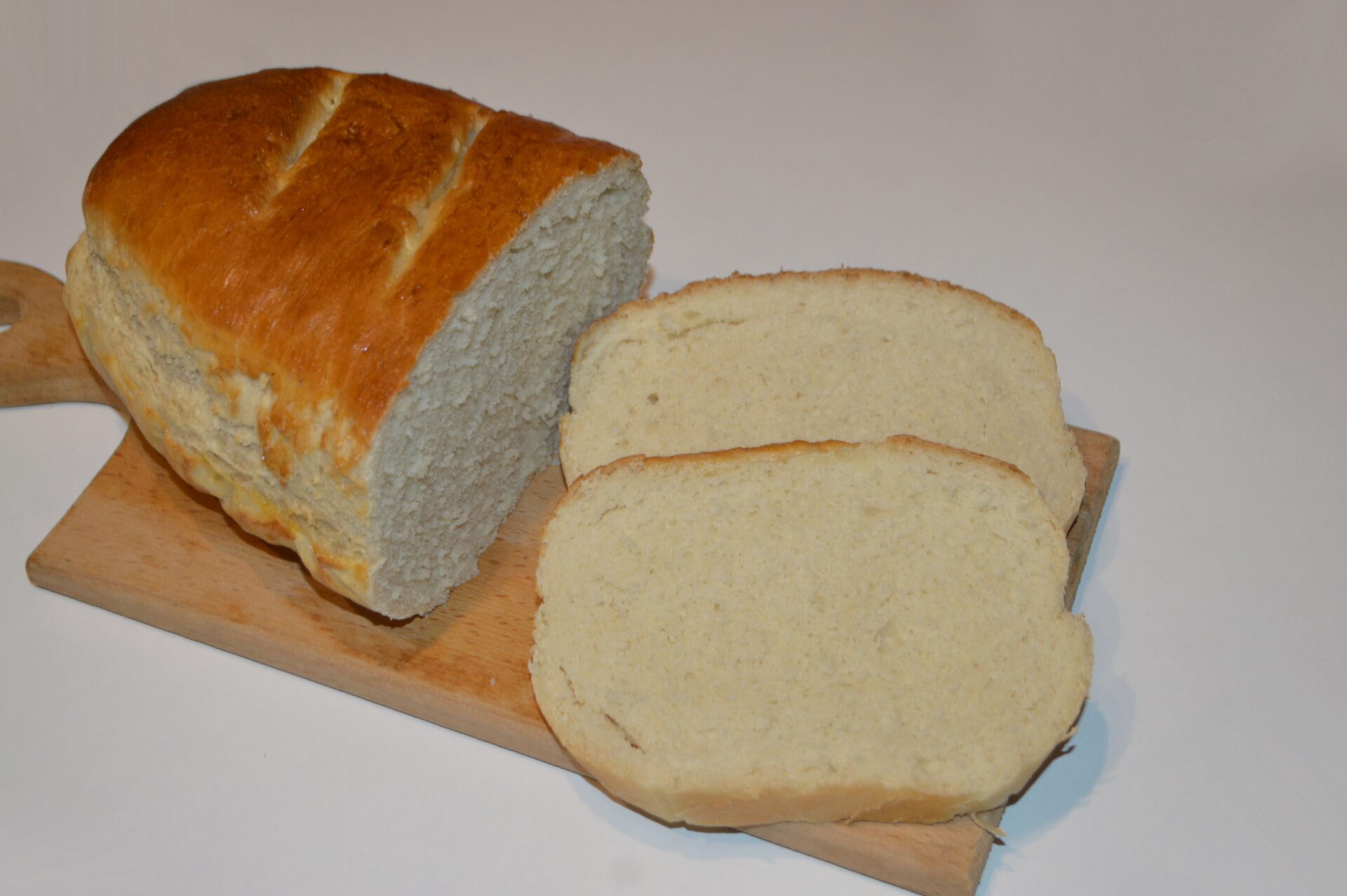
Homemade sandwich bread is one of the easiest ways to start baking with yeast, because the dough is soft, forgiving and needs only a few ingredients. Two rises give it a tall shape and an airy crumb.
I shaped mine as a sandwich loaf, but the same dough can be braided or baked as a round. Scoring the top and baking in two temperature stages is what gives it a tall rise and a golden crust.
Ingredients
For the bread
- 4⅓ cups all-purpose flour
- 1¾ cups warm water
- 1 tsp salt
- 2¼ tsp dry yeast
- 2 tbsp sunflower oil
For brushing
- 1 egg
Instructions
- Pour the warm water into a bowl and add the salt.

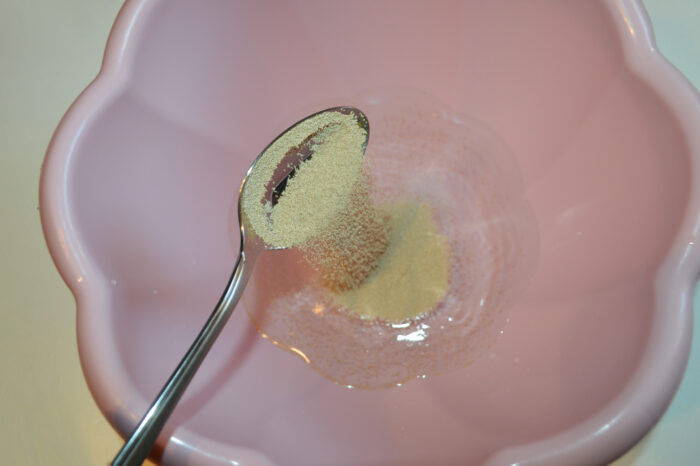
- Add the dry yeast.

- Add the sunflower oil.
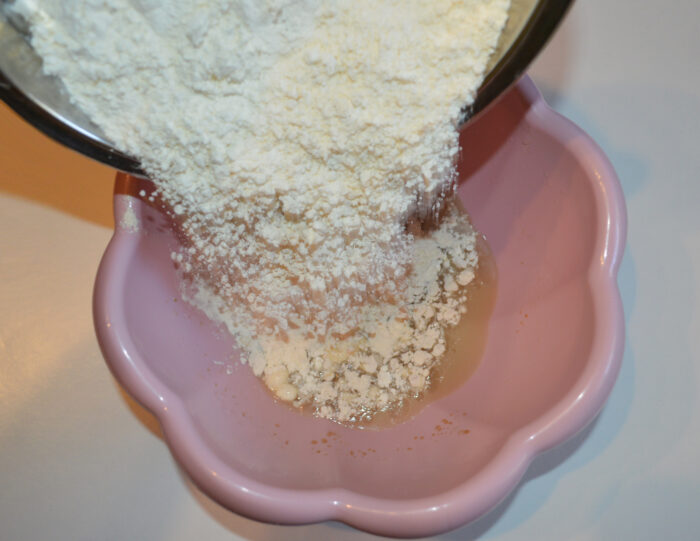
- Add the flour gradually.

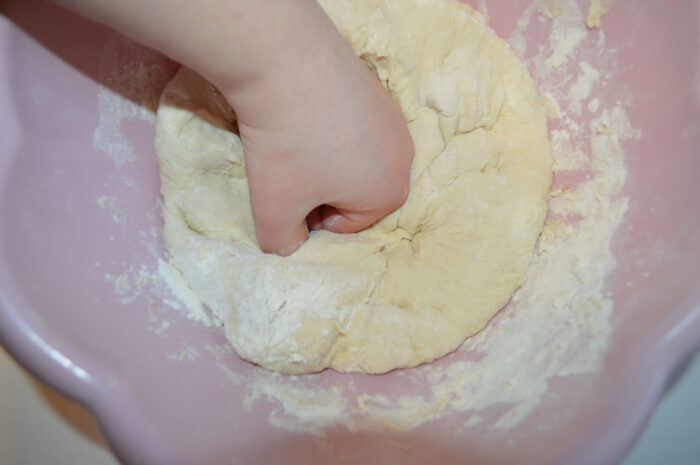
- Knead the dough for 5 minutes.
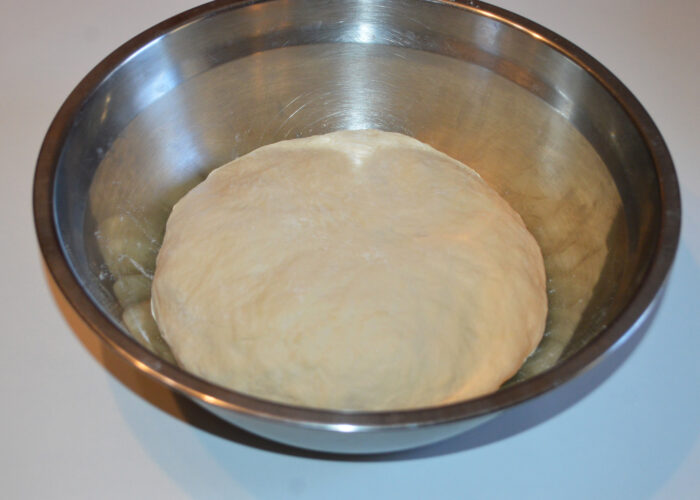
- Shape the dough into a ball and transfer it to a clean, dry bowl dusted with a little flour. Cover the bowl with a towel and let the dough rise in a warm place for 1 hour.

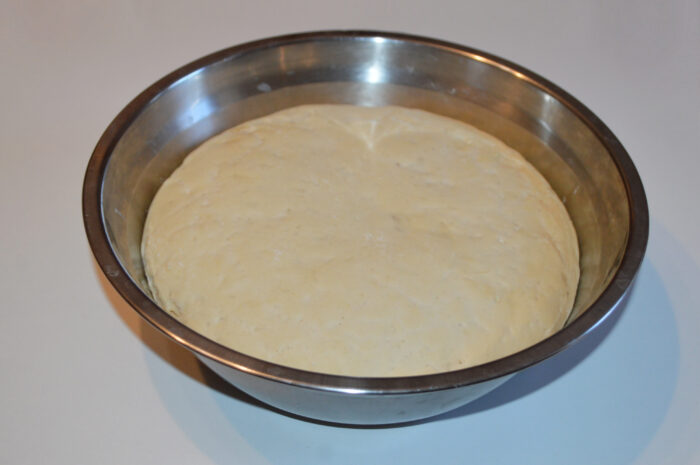
- The dough has risen in volume.
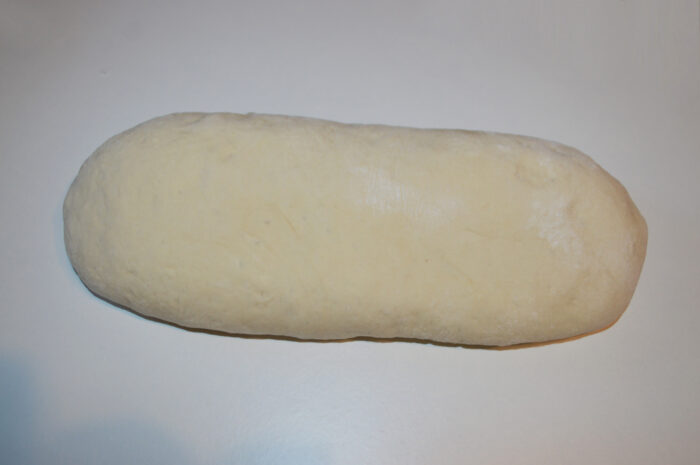
- Transfer the dough to a floured surface and knead it a little more. Shape the bread as you like. I chose a sandwich loaf, but you can divide and braid the dough, or shape a round loaf.
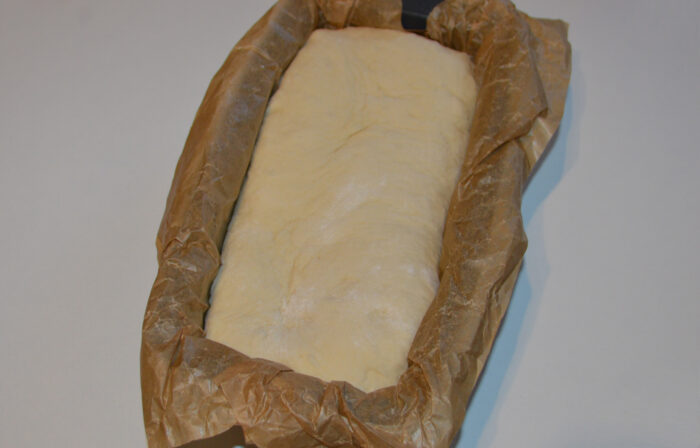
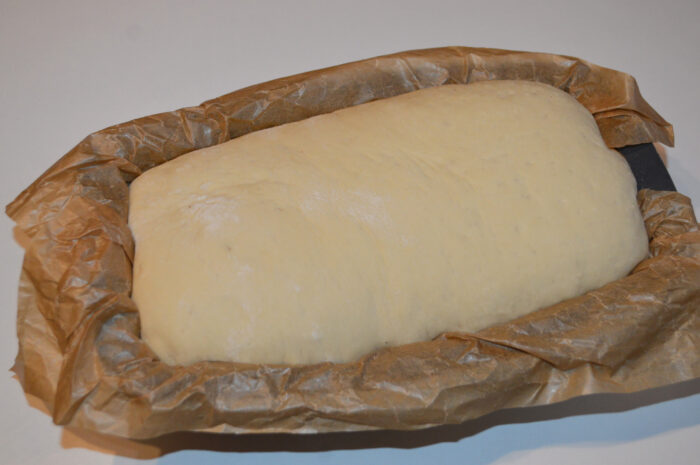
- Place the bread in a pan lined with parchment paper and cover it with a towel. Let it rise for another 20 minutes.

- The bread has risen in volume.
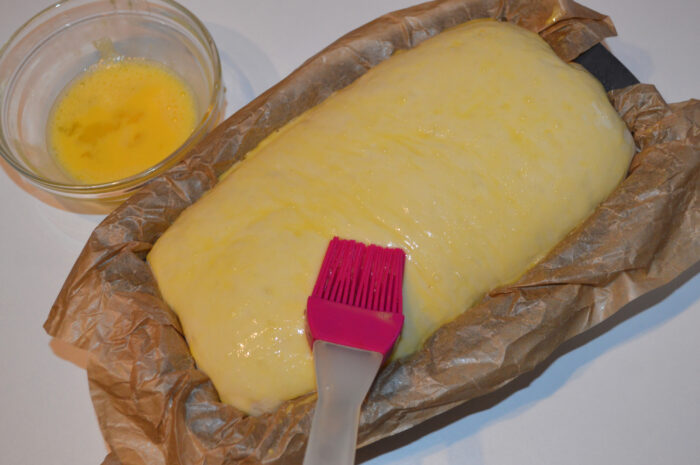
- Beat an egg and brush the bread with a pastry brush.
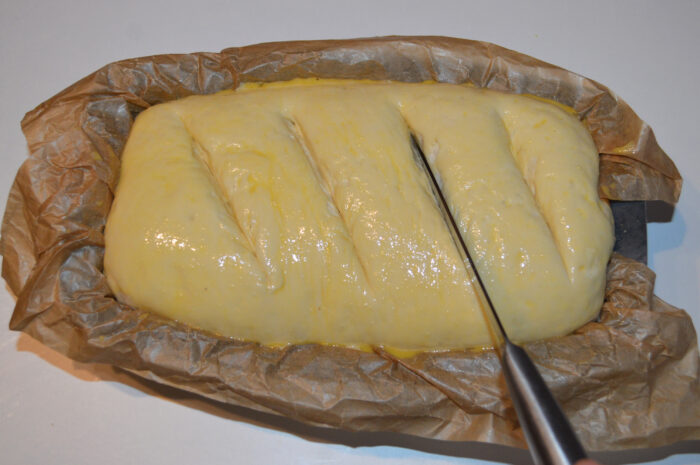
- Scoring the bread with a knife is important: it helps the loaf open nicely during baking, without cracking from excess gas. This gives a well-aerated, tall crumb.
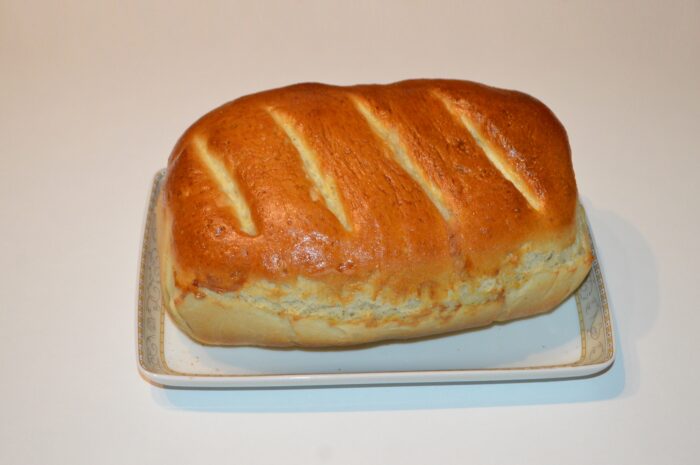
- Preheat the oven. Bake the bread for 20 minutes at 410°F (210°C), then reduce to 350°F (180°C) and bake for another 20 minutes. Let it cool, then slice.


Notes
- Use lukewarm water, never hot.
- Add the flour gradually; the dough should be soft but not sticky.
- Let the dough double in size rather than watching the clock.
- Score the loaf just before it goes into the oven.
- Let the bread cool for at least an hour before slicing.
- Store wrapped at room temperature for 2 to 3 days.
Nutrition
Nutrition information is automatically calculated, so should only be used as an approximation.
Why isn’t my homemade sandwich bread rising?
The usual causes are expired yeast, water that is too hot or too cold, or a rise in a cool spot. Check the date on the yeast and use lukewarm water.
A draft-free, warm place makes the biggest difference.
How do you know the dough has risen enough?
It has visibly doubled and springs back slowly when pressed lightly. Judge by size, not by the clock, since kitchens differ.
If you press and the dent stays, the dough is ready to shape.
Why do you score homemade sandwich bread?
Scoring lets the loaf open along a planned line instead of splitting somewhere random. Gas keeps expanding in the oven, and the cuts give it a place to go.
Use a sharp knife and cut about half a centimeter deep.
Can you use a different flour for homemade sandwich bread?
Plain white bread flour or all-purpose flour both work. Flours absorb water differently, so add the last portion gradually until the dough is soft but not sticky.
A slightly tacky dough gives the softest crumb.
Why bake sandwich bread at two temperatures?
The hotter first stage gives a strong rise and color, and the lower second stage cooks the center through. Baking at one high heat would brown the crust before the inside is done.
The loaf sounds hollow when tapped on the bottom.
How long should homemade sandwich bread cool before slicing?
At least an hour. The crumb is still setting while it cools, and cutting early makes it gummy.
A serrated knife gives clean, even slices for sandwiches or toast.
Frequently asked questions
Expired yeast, water that is too hot or too cold, or a cool room are the common causes. Check the date and use lukewarm water.
Yes, white flour made for bread works. Add the flour gradually until the dough is soft but not sticky.
Wrap it in a towel or put it in a bag at room temperature for 2 to 3 days.