 Carmen
If you’re craving a dinner that’s light, filling, and packed with protein without much effort, this baked chicken and cheese casserole is exactly what you need. Made with tender chicken breast, creamy cottage cheese, eggs, and a touch of cream cheese, it bakes up soft and satisfying in under 30 minutes. It’s a great option for busy weeknights when you still want something wholesome on the table.
Choosing the Right Cheese for This Recipe
Cottage cheese is the star here, giving the casserole its soft, slightly tangy base, but not every brand behaves the same way in the oven. Look for a cottage cheese with small curds and moderate moisture; overly wet cottage cheese can make the casserole loose instead of holding its shape after baking. Cream cheese rounds out the texture, adding richness and helping the mixture bind smoothly when stirred through. If you can’t find cottage cheese where you live, ricotta is a close substitute with a similar mild flavor and creamy consistency. Whichever cheese you choose, make sure it’s at room temperature before mixing — cold cheese straight from the fridge blends less evenly and can leave lumps in the finished bake.
Prepping the Chicken for Even Cooking
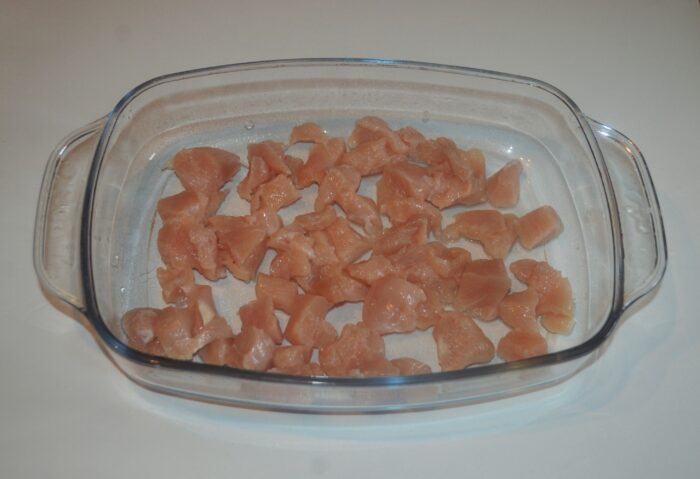
Cutting the chicken breast into small, bite-sized pieces before baking is one of the most important steps for this casserole. Smaller pieces cook through faster and more evenly, so you avoid the risk of undercooked centers or overly dry edges by the time the cheese mixture sets. Try to keep the pieces roughly uniform in size — this helps everything finish cooking at the same rate in the oven. There’s no need to pre-cook or sear the chicken beforehand, since baking at 350°F for 25 to 30 minutes is enough time to cook it through completely while the eggs and cheese set around it. Pat the chicken dry with a paper towel first if it seems wet, so the final casserole doesn’t turn out watery.
The Role of Lemon Juice in This Dish
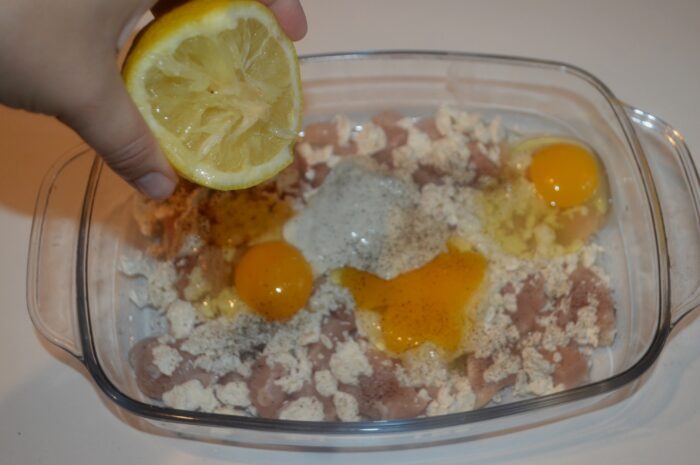
A small splash of fresh lemon juice might seem like a minor addition, but it makes a noticeable difference in the final flavor of this casserole. It brightens the richness of the cheese and eggs, cutting through the heaviness so the dish doesn’t taste flat or overly dense. Lemon juice also helps balance the mild tang of the cottage cheese, giving the overall flavor more depth without adding any extra fat or calories. Use freshly squeezed juice rather than bottled if possible, since it has a cleaner, more vibrant taste. Just a small amount is needed — this isn’t meant to taste lemony, only to lift the other flavors slightly.
Seasoning Tips to Make It Your Own
Salt and pepper are the base seasoning here, but this casserole is easy to customize with whatever spices you have on hand. Garlic powder, smoked paprika, dried oregano, or a pinch of chili flakes all work well without overpowering the mild chicken and cheese base. If you like a bit of freshness, chopped chives or parsley stirred in right before baking add color and a light herbal note. Because the base flavor is intentionally mild, this recipe is forgiving and works with a wide range of seasoning styles, from Mediterranean to a simple homestyle profile. Just be mindful not to add too much liquid-based seasoning, like sauces, since it can affect how well the casserole sets in the oven.
Getting the Bake Time and Texture Right
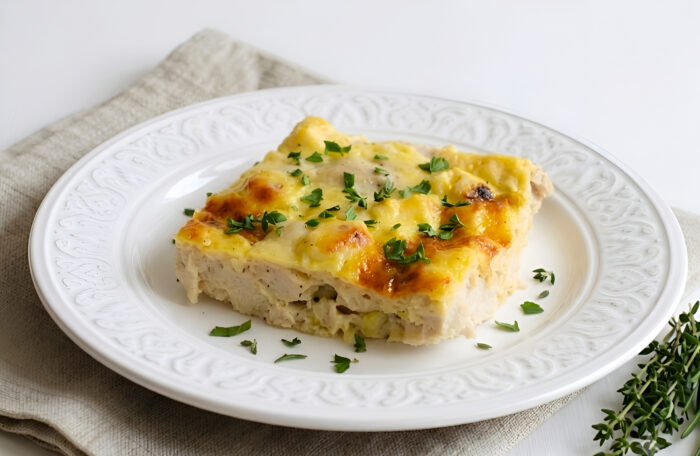
Baking at 350°F for 25 to 30 minutes is the sweet spot for this casserole, giving the eggs enough time to set fully while keeping the chicken tender rather than dry. The top should turn lightly golden, and the center should look firm rather than jiggly when you gently shake the dish. Every oven runs slightly differently, so start checking around the 25-minute mark, especially if your baking dish is shallower or wider than a standard one. If the top browns too quickly before the center sets, loosely cover the dish with foil for the last few minutes. Letting the casserole rest for five minutes after baking makes it much easier to slice into clean portions.
Serving Suggestions for This High-Protein Bake
This casserole is versatile enough to serve on its own or alongside simple sides that round out the meal. A crisp green salad with a light vinaigrette complements the richness of the cheese nicely, while steamed vegetables like broccoli or green beans add color and extra nutrients. For a heartier dinner, serve slices over a bed of rice, quinoa, or mashed potatoes to soak up the creamy texture. It also works well as a make-ahead lunch, since it reheats nicely in the microwave without drying out too much. A light drizzle of hot sauce or a dollop of plain yogurt on top can add a nice contrast if you want a little extra flavor.
Ingredients
- 2 heaping cups boneless, skinless chicken breast finely chopped
- ⅔ cup cottage cheese well drained
- 3 large eggs
- 3 tablespoons cream cheese softened
- salt to taste
- ground black pepper to taste
- a squeeze of fresh lemon juice
Instructions
- Finely chop the chicken breast and add it to a baking dish.

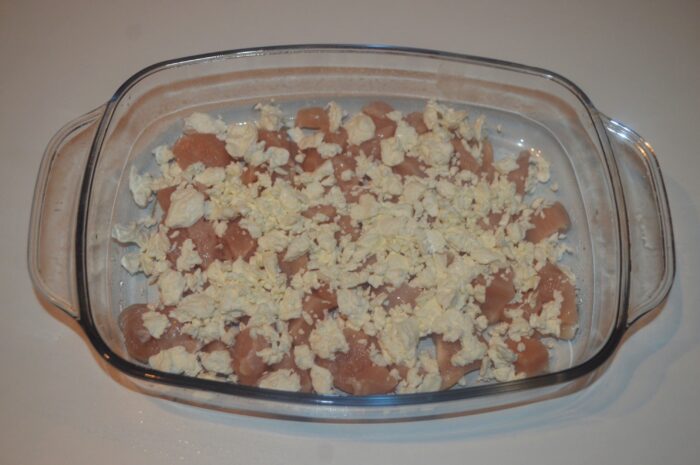
- Add the cottage cheese.

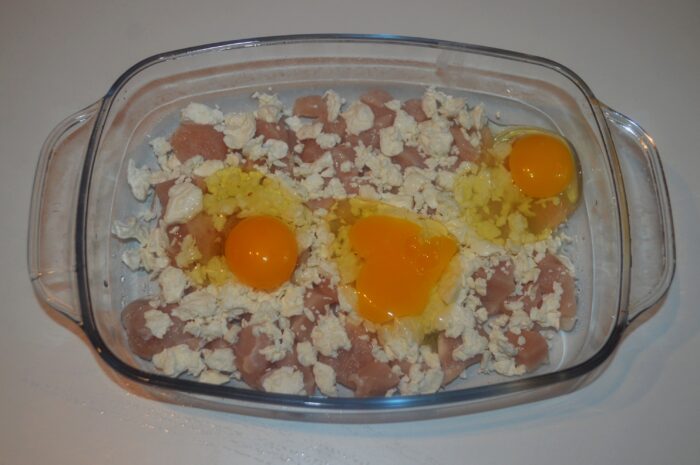
- Add the eggs.
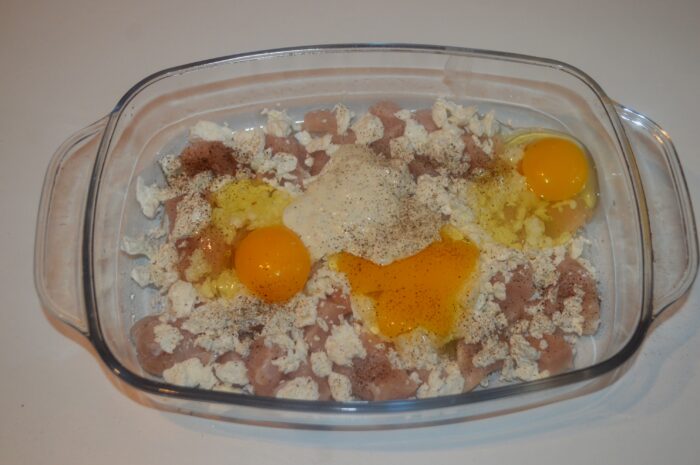
- Add the cream cheese, then season with salt and pepper to taste. You can also add any favorite dried herbs or seasonings.
- Squeeze a little fresh lemon juice over the mixture.
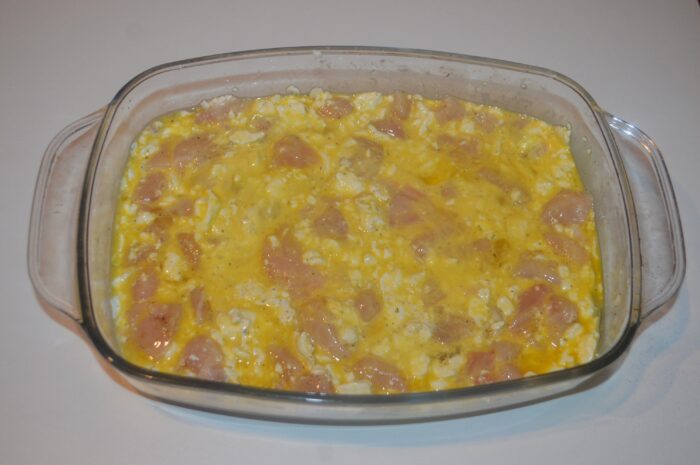
- Stir everything together with a spoon, then bake at 350°F (180°C) for 25–30 minutes, until set and lightly golden on top.
- Slice and serve this healthy, high-protein casserole warm

Notes
- For best texture, use firm cottage cheese and drain off any excess liquid before adding it to the dish.
- Finely chopping the chicken breast helps the casserole cook evenly and keeps each slice tender and juicy.
- A small squeeze of lemon brightens the flavor and balances the richness of the cheese without making the dish taste overtly lemony.
- Feel free to add favorite dried herbs, such as oregano or Italian seasoning, but avoid adding watery vegetables that could change the bake time.
- Let the casserole rest for a few minutes before slicing so it holds its shape better on the plate.
- Store leftovers covered in the fridge for up to three days and reheat gently to avoid drying out the chicken.
Nutrition
Nutrition information is automatically calculated, so should only be used as an approximation.