 Carmen
Papanasi are usually known as a sweet dessert, but this savory version made with salty telemea cheese offers a completely different — and equally addictive — experience. The dough comes together with just cheese, egg, sugar, water, and flour, then gets shaped into little balls and pan-fried until deeply golden. Ready in a quarter of an hour, it’s the kind of recipe you’ll want to keep on repeat.
What Cheese Works Best for Salty Papanasi
The star ingredient here is telemea, a firm, salty brine cheese widely used in Moldovan and Romanian cooking. Its dense texture holds up well to grating and frying, giving the dumplings a savory, slightly tangy bite that contrasts beautifully with the crispy fried shell. If you can’t find telemea locally, feta cheese is the closest and most accessible substitute, since it shares a similar salt level and crumbly-but-firm structure. Avoid cheeses that are too soft or too wet, like fresh ricotta, as they’ll add too much moisture and make the dough difficult to shape and fry properly. The cheese should be grated coarsely rather than finely, which helps it blend evenly into the dough while still leaving small pockets of cheese that melt slightly during frying.
Getting the Dough Consistency Right
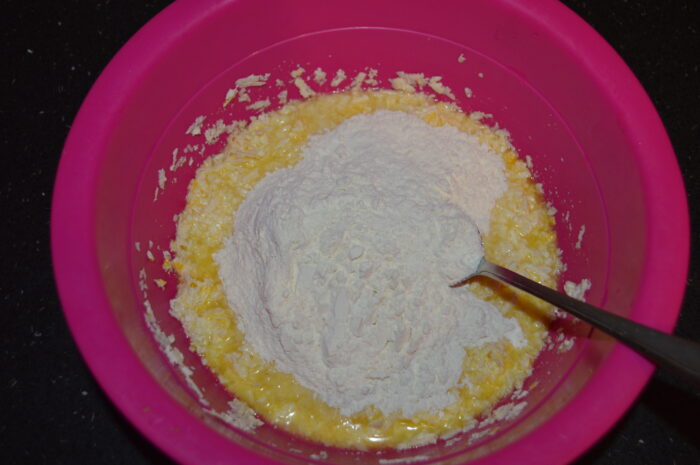
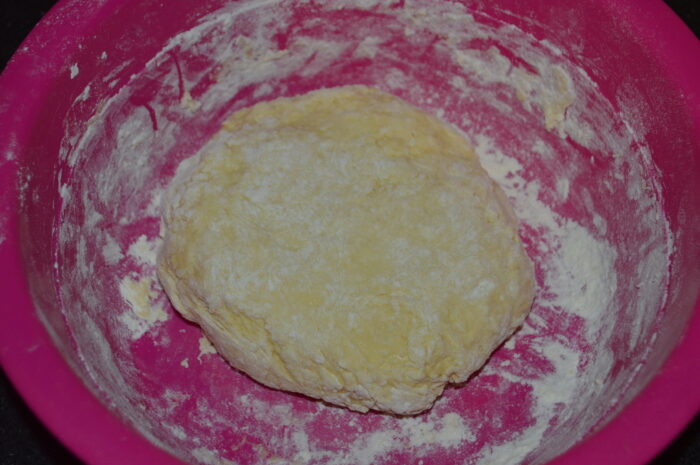
This dough comes together with just five ingredients — cheese, egg, sugar, water, and flour — but the order and technique matter. Starting with the wet ingredients (cheese, egg, sugar, water) before adding flour ensures the dry ingredient hydrates evenly without forming lumps. When mixing, start with a spoon to bring everything together loosely, then switch to kneading by hand once the flour is mostly incorporated. The finished dough should be slightly sticky rather than dry or stiff; this stickiness is actually a good sign, as it means the dumplings will fry up tender inside rather than dense. If the dough feels too wet to handle, dust your hands with a little extra flour rather than adding more to the dough itself.
The Glass Trick for Perfectly Round Dumplings
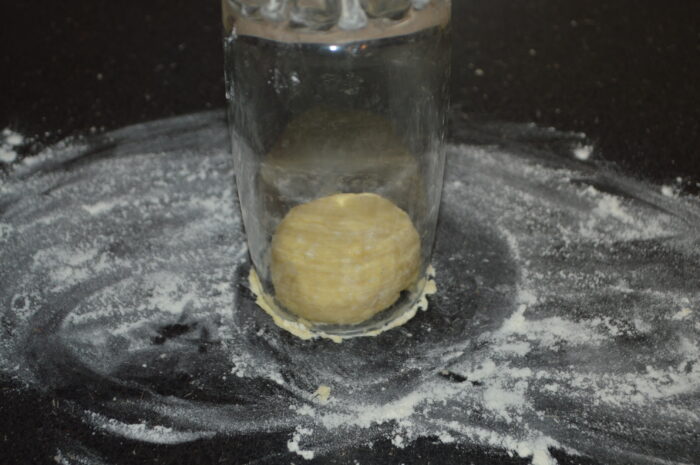
One of the simplest tricks in this recipe is using an ordinary drinking glass to shape the papanasi into neat, round balls. After rolling the dough into rough balls and dusting them lightly with flour, place each ball inside an upturned glass and rotate the glass a few times on a flat surface. The motion smooths out the surface and creates an even, symmetrical shape without any fuss. This method works far better than trying to shape perfect spheres by hand, especially with a slightly sticky dough. It also helps the dumplings fry more evenly, since an even, round shape means every side gets consistent contact with the hot oil.
Frying Technique: Crispy Outside, Soft Inside
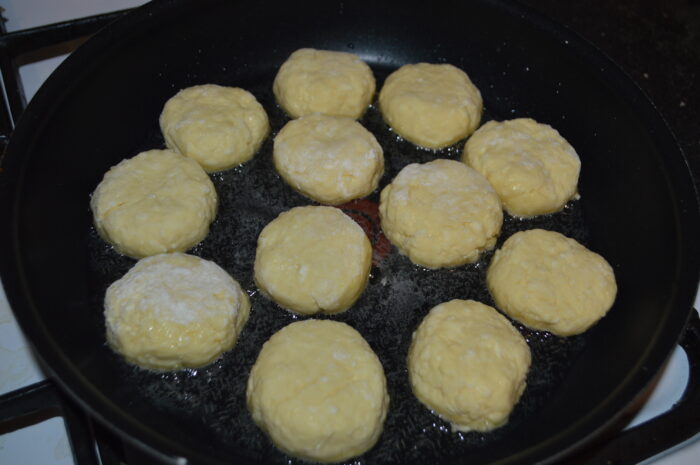
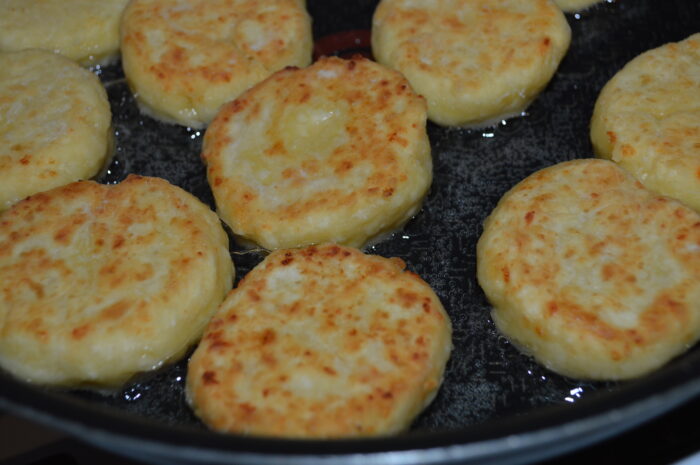
The key to great papanasi lies in the frying method: low heat, plenty of oil, and a lid on the pan. Heating the oil for about a minute before adding the dough balls ensures the exterior starts crisping immediately, sealing in moisture. Frying over low heat with the lid on allows the inside of the dumplings to cook through gently while the surface turns golden and crackly, rather than burning before the center is done. Flip the papanasi only once they’ve developed a solid golden crust on the first side, then let the second side fry until matching. This slow, covered approach is what gives papanasi their signature texture — crunchy on the outside, soft and cheesy within.
Best Ways to Serve Salty Papanasi
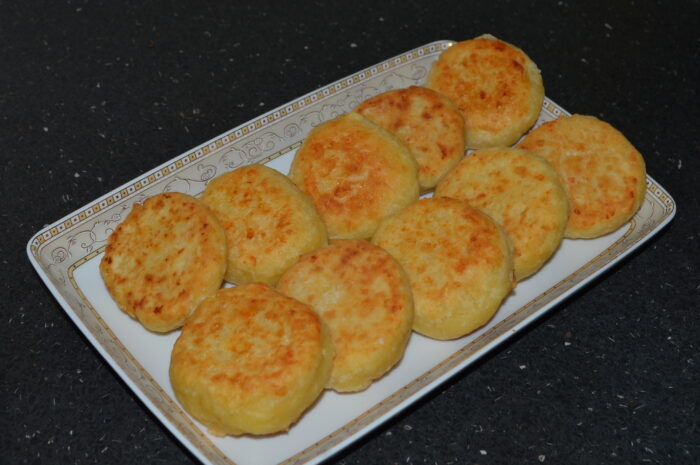
Salty telemea papanasi are versatile enough to serve as a quick dessert, an afternoon snack, or even a light savory bite. The most traditional pairing is a dollop of sour cream, which balances the saltiness of the cheese with a cool, creamy contrast. For those who prefer a sweeter finish, a spoonful of fruit jam works surprisingly well against the savory dough. They’re best served warm, right after frying, when the outside is still at its crispiest and the cheese inside is soft and slightly melted.
Ingredients
- 10 oz salty telemea cheese you can substitute feta
- 1 large egg
- 1 tablespoon granulated sugar
- 7 tablespoons water
- 1 heaping cup all-purpose flour
- neutral oil for frying
Instructions
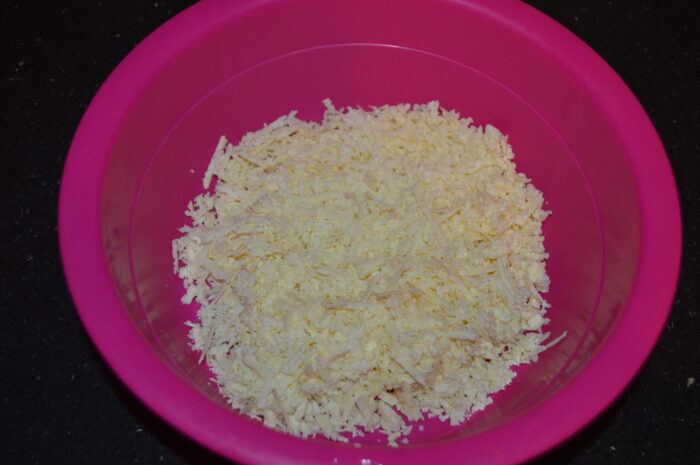
- Grate the telemea cheese on the large holes of a box grater into a medium bowl.

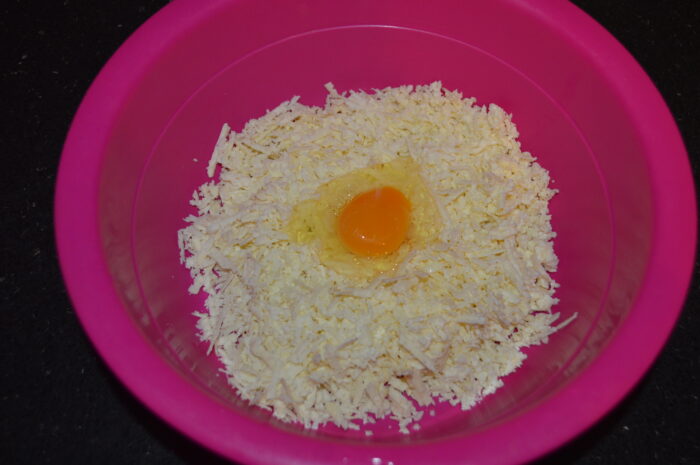
- Add the egg to the bowl with the grated cheese.
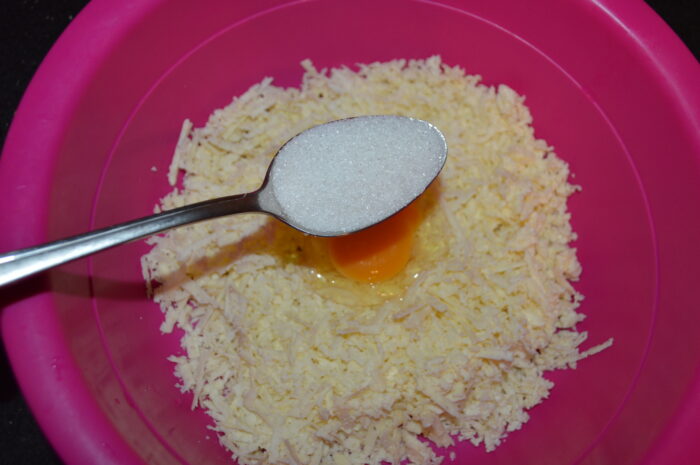
- Sprinkle in the tablespoon of sugar and mix briefly to combine.
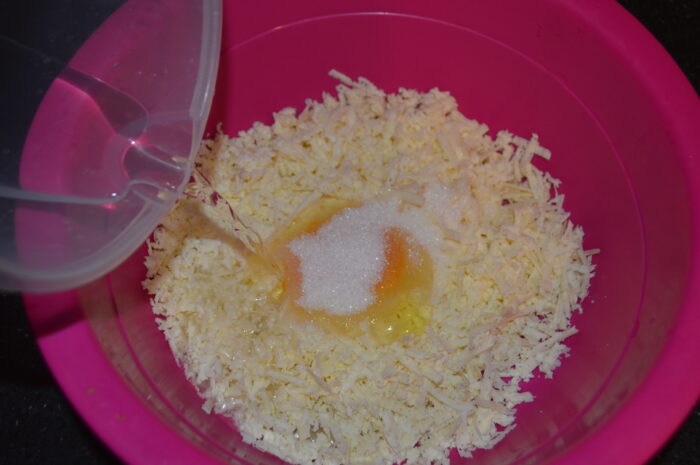
- Pour in the water and stir until the mixture loosens slightly.
- Add the flour, mixing first with a spoon, then switching to your hands as the dough starts to come together.
- Knead the dough just until it comes together and feels slightly sticky but holds its shape.
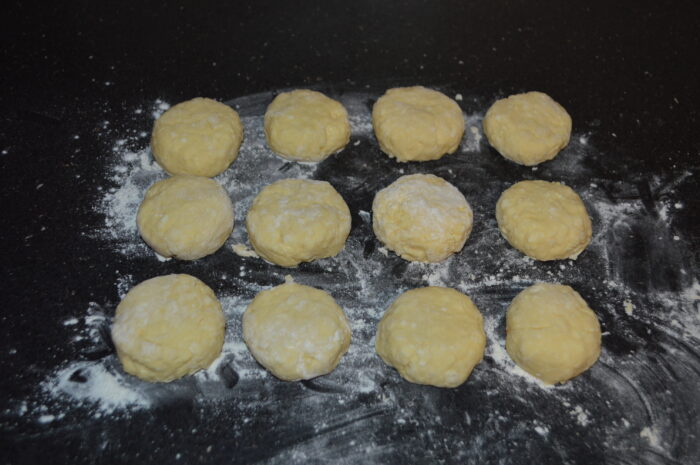
- Pinch off small pieces of dough and roll them into balls, dusting them lightly with flour. Then use the rim of a glass to press and shape each ball into a neat round. Place the glass over the dough ball and rotate it a few times to smooth the edges.
- Repeat with the remaining dough; you should get about 12 dough balls.
- Pour a shallow layer of oil into a frying pan, set it over medium-low heat, and let the oil heat for about a minute. Gently transfer the cheese fritters to the pan, cover with a lid, and fry over low heat.
- After a few minutes, flip each fritter to the other side and continue frying until golden.
- The savory papanasi are ready when golden and cooked through; serve hot and enjoy.
Notes
- Use well-chilled telemea; it grates more easily and distributes evenly through the dough.
- Do not overwork the dough; mix just until combined to keep the fritters tender.
- Keep the heat on the lower side so the outside does not brown before the center is cooked.
- Fry in batches to avoid crowding the pan, which can lower the oil temperature.
- If using feta instead of telemea, taste a small fried piece first and adjust only the sugar if needed, not the salt.
- Serve immediately for the best texture, with sour cream, yogurt, or a simple salad to balance the richness.
Nutrition
Nutrition information is automatically calculated, so should only be used as an approximation.